
ESP32 Type-C CP2102 30 Pin Dev Board – Dual Core WiFi+BT
₹395.30 incl. GST (₹335.00 + GST)
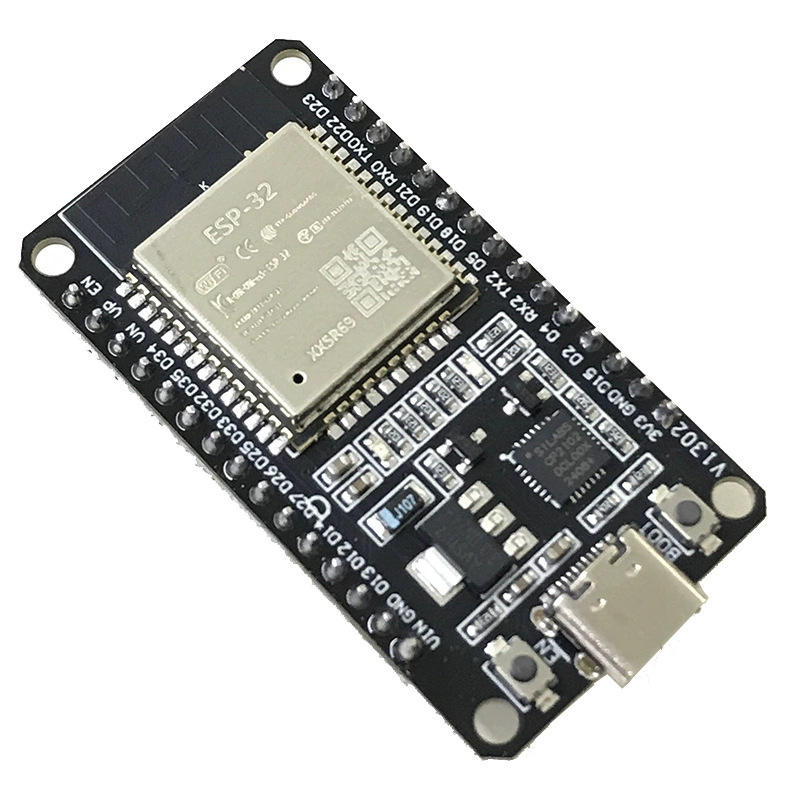
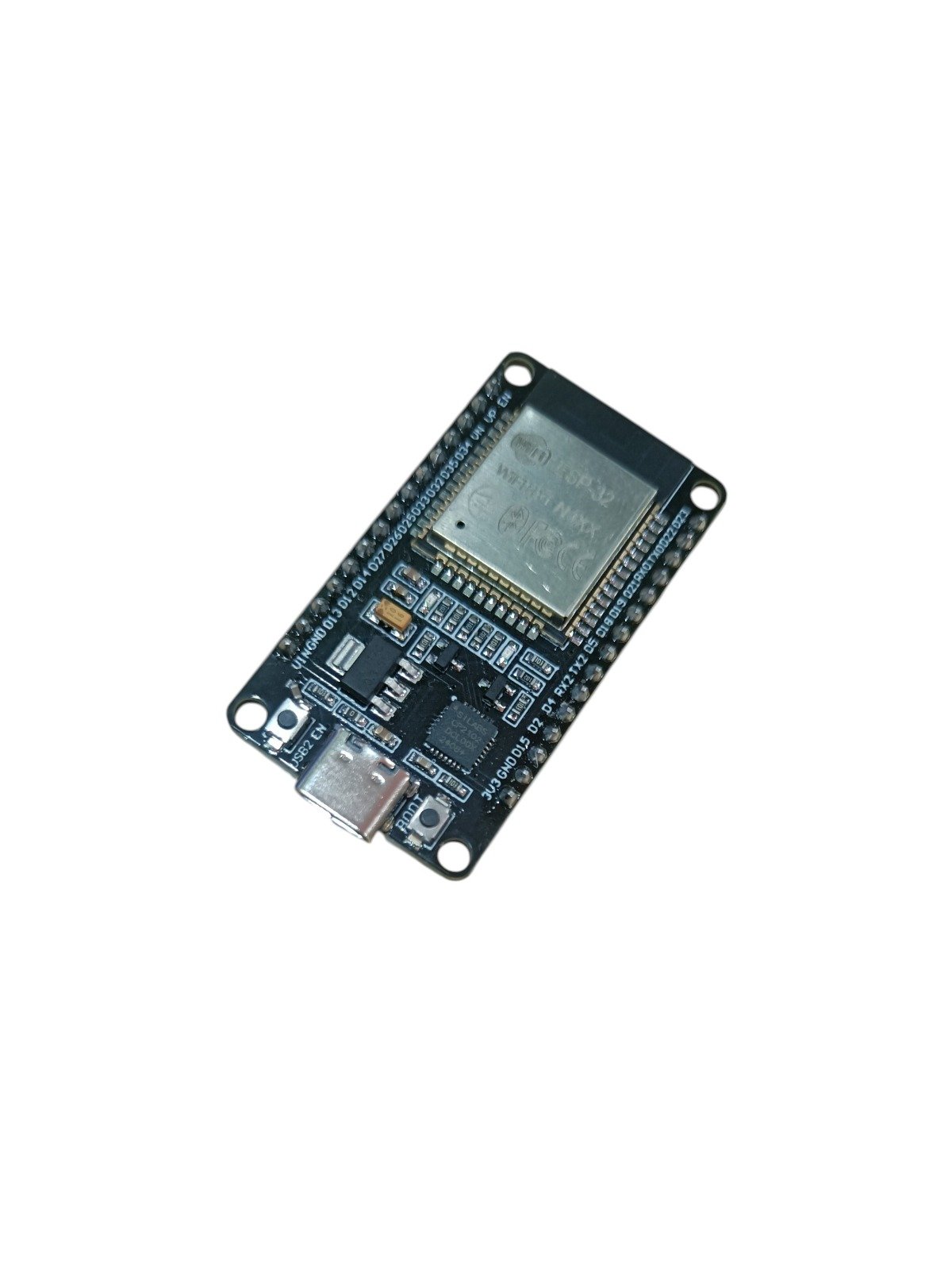
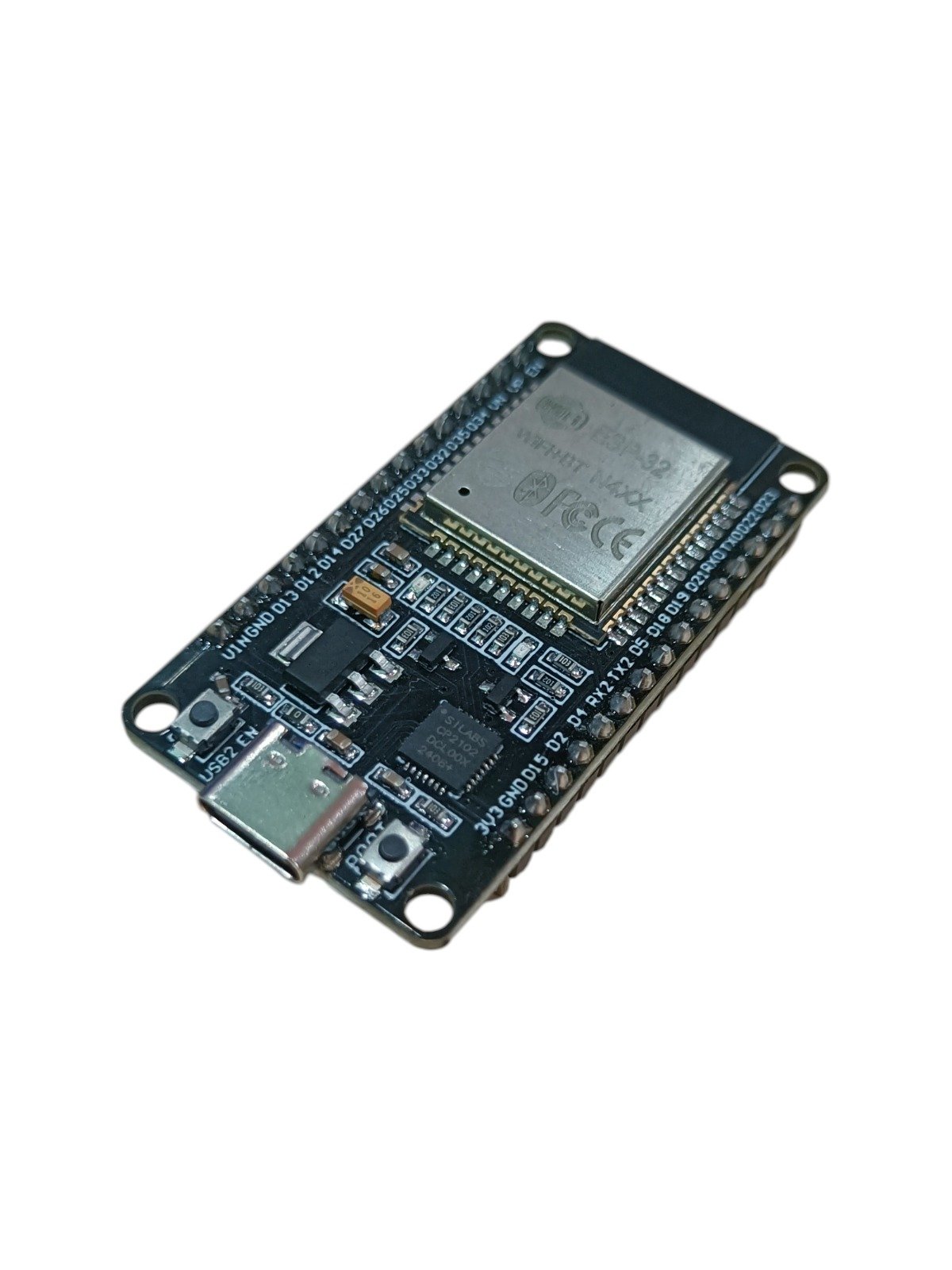
ESP32 30-Pin Development Board is a powerful dual-core ESP32 board featuring 2.4GHz Wi-Fi, Bluetooth Classic & BLE, CP2102 USB-to-UART, USB Type-C, 4MB Flash, and 30 GPIO pins. With support for Arduino IDE, ESP-IDF, and MicroPython, it is ideal for IoT, robotics, automation, wireless, and embedded projects.
ESP32 30-Pin Development Board – CP2102 USB Type-C Dual-Core Wi-Fi & Bluetooth
Product Description
The ESP32 30-Pin Development Board is a versatile and powerful development platform designed for IoT, robotics, automation, wireless communication, embedded systems, and electronics prototyping.
Based on the ESP32 dual-core 32-bit LX6 processor, the board provides high processing performance with a clock speed of up to 240 MHz. It combines integrated 2.4GHz Wi-Fi with Bluetooth Classic and Bluetooth Low Energy (BLE), making it suitable for a wide range of wireless and connected applications.
This version features a CP2102 USB-to-UART converter, providing reliable USB serial communication for programming, debugging, and development. The modern USB Type-C connector offers convenient connectivity for both programming and power.
The board uses a compact 30-pin layout, making it suitable for breadboard prototyping and custom embedded projects. It provides access to multiple communication interfaces including UART, SPI, I2C, ADC, DAC, and PWM, allowing users to connect sensors, displays, motors, relays, and other electronic modules.
Compatible with Arduino IDE, ESP-IDF, and MicroPython, the ESP32 30-Pin Development Board is suitable for beginners, students, makers, engineers, and professional developers working on connected electronics and embedded applications.
Features
- ESP32 dual-core 32-bit LX6 microcontroller
- Processor speed up to 240 MHz
- Integrated 2.4GHz Wi-Fi
- Bluetooth Classic and Bluetooth Low Energy
- CP2102 USB-to-UART bridge
- USB Type-C connector
- 30-pin development board layout
- Breadboard-friendly design
- 520KB SRAM
- 4MB external Flash memory
- Multiple UART interfaces
- SPI communication support
- I2C communication support
- ADC inputs
- DAC outputs
- PWM support
- Compatible with Arduino IDE
- Compatible with ESP-IDF
- Compatible with MicroPython
- Suitable for IoT and wireless projects
- Ideal for robotics and automation
- Suitable for embedded system prototyping
Specifications
| Parameter | Specification |
|---|---|
| Product Type | ESP32 Development Board |
| Microcontroller | ESP32 |
| Processor | Dual-Core 32-bit Xtensa LX6 |
| Clock Frequency | Up to 240 MHz |
| USB Interface | CP2102 USB-to-UART |
| USB Port | USB Type-C |
| SRAM | 520KB |
| Flash Memory | 4MB External Flash |
| Wireless | Wi-Fi 802.11 b/g/n |
| Bluetooth | Bluetooth V4.2 BR/EDR/BLE |
| GPIO / Pins | 30 Pins |
| Operating Voltage | 3.3V Internal |
| USB / VIN Voltage | 5V |
| UART | 3 |
| SPI | 3 |
| I2C | 2 |
| ADC | 12 |
| DAC | 2 |
| PWM | Supported |
| Development Support | Arduino IDE, ESP-IDF, MicroPython |
Design and Construction
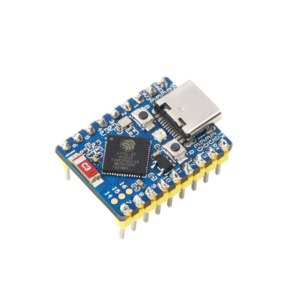
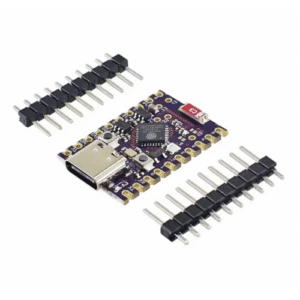
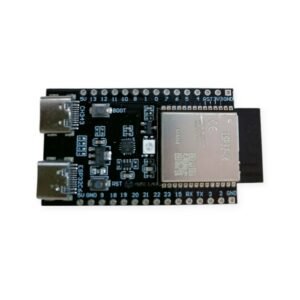
The ESP32 30-Pin Development Board features a compact and breadboard-friendly PCB layout that provides convenient access to the ESP32’s GPIO and peripheral interfaces.
The 30-pin configuration offers a balance between functionality and compact size, making the board suitable for projects where PCB space is limited while still requiring access to important communication and control pins.
The integrated CP2102 USB-to-UART converter provides a reliable interface between the ESP32 and a computer for firmware programming, serial monitoring, and debugging.
The USB Type-C connector provides a modern and reversible connection for programming and powering the board.
Working Principle
The ESP32 acts as the main processing and wireless communication controller for the project. Users can upload firmware through the USB Type-C interface using the onboard CP2102 USB-to-UART converter.
The processor can control connected sensors, LEDs, displays, motors, relays, and other peripherals using its GPIO and communication interfaces.
The integrated Wi-Fi and Bluetooth capabilities allow the board to communicate wirelessly with smartphones, computers, cloud services, sensors, and other connected devices.
The board can be programmed using Arduino IDE, ESP-IDF, MicroPython, and other supported development environments.
Communication Interfaces
The board provides multiple hardware interfaces for connecting external devices:
UART
UART can be used for serial communication with GPS modules, GSM modules, sensors, displays, computers, and other serial devices.
SPI
SPI can be used for high-speed communication with displays, memory devices, sensors, SD cards, and other peripherals.
I2C
I2C allows multiple compatible sensors, displays, RTC modules, and other devices to share the same communication bus.
ADC and DAC
ADC inputs can be used to read analog signals from sensors and other devices, while DAC outputs can be used for suitable analog-output applications.
PWM
PWM can be used to control LEDs, motors, servos, and other devices requiring variable-duty-cycle signals.
Wireless Connectivity
The ESP32 integrates both 2.4GHz Wi-Fi and Bluetooth connectivity, allowing it to function as a wireless controller or connected IoT device.
Wi-Fi can be used for applications such as web servers, cloud connectivity, remote monitoring, wireless data transmission, and smart home systems.
Bluetooth can be used for local communication with smartphones, controllers, sensors, and other compatible devices.
Typical Application Scenarios
IoT Projects
Suitable for smart sensors, cloud-connected devices, wireless monitoring systems, and home automation.
Robotics
Can be used as the main controller for robotic systems, providing wireless communication and interfaces for motors, sensors, servos, and displays.
Home Automation
Suitable for smart switches, lighting controllers, security systems, environmental monitoring, and connected appliances.
Industrial and Embedded Systems
Useful for developing wireless control systems, monitoring devices, data acquisition systems, and automation prototypes.
Electronics Learning
The board is suitable for learning ESP32 programming, GPIO control, Wi-Fi, Bluetooth, sensors, communication protocols, and embedded development.
Applications
- IoT development
- Smart home automation
- Wireless sensor systems
- Robotics projects
- Automation systems
- Remote monitoring
- Wi-Fi web servers
- Bluetooth projects
- Home security systems
- Industrial automation prototypes
- Sensor data logging
- Motor and servo control
- Display projects
- GPS projects
- Wireless control systems
- Arduino projects
- MicroPython projects
- ESP-IDF development
- Educational electronics
- Custom embedded systems
- IoT product prototyping
Package Includes
- 1 × ESP32 30-Pin Development Board
- CP2102 USB-to-UART Bridge
- USB Type-C Interface
Product Disclaimer
Product images are shown for illustrative and representational purposes only. The actual board may vary slightly in PCB colour, component placement, connector design, chip marking, antenna configuration, or other visual details depending on the manufacturing batch.
USB Type-C cable, sensors, displays, breadboards, jumper wires, motors, and other accessories shown in product images are not included unless specifically mentioned in the package contents.
ESP32 development boards can be available in different pin configurations and hardware revisions. Please verify the exact pinout and board version before replacing an existing ESP32 board in a project.
Important Note
Pin Compatibility
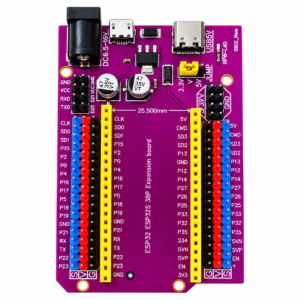
This product is the 30-pin version of the ESP32 development board. Some ESP32 development boards use a 38-pin configuration and may have different pin availability.
Please verify your project’s pin requirements and wiring before replacing an existing ESP32 board.
Frequently Asked Questions
1. What is the ESP32 30-Pin Development Board?
It is an ESP32-based development board designed for Wi-Fi, Bluetooth, IoT, robotics, automation, and embedded electronics projects.
2. What processor does it use?
The board uses a dual-core 32-bit Xtensa LX6 processor with a clock speed of up to 240 MHz.
3. Does it support Wi-Fi?
Yes. It supports 2.4GHz Wi-Fi based on IEEE 802.11 b/g/n.
4. Does it support Bluetooth?
Yes. It supports Bluetooth Classic and Bluetooth Low Energy.
5. What USB converter does the board use?
This version uses the CP2102 USB-to-UART converter.
6. Does it have a USB Type-C connector?
Yes. The board uses a USB Type-C connector for programming and power.
7. How many pins does this board have?
This is the 30-pin version of the ESP32 development board.
8. Can I use it with Arduino IDE?
Yes. It is compatible with the Arduino IDE and other ESP32 development tools.
9. Can I use it with MicroPython?
Yes. The board is suitable for MicroPython development.
10. Can I use it with ESP-IDF?
Yes. It can be programmed using Espressif's ESP-IDF framework.
11. Does the board support SPI and I2C?
Yes. It provides multiple SPI and I2C interfaces.
12. Can it be used for robotics?
Yes. Its GPIO, PWM, ADC, UART, SPI, I2C, Wi-Fi, and Bluetooth capabilities make it suitable for robotics projects.
13. Can I use it for IoT projects?
Yes. The integrated Wi-Fi and Bluetooth make it suitable for connected IoT devices and smart home systems.
14. Does it have 4MB Flash memory?
Yes. This product specification lists 4MB external Flash memory.
15. What is the operating voltage?
The ESP32 operates internally at 3.3V, while the board can be powered through the USB Type-C interface or suitable 5V input.
16. Is the USB cable included?
No. The package includes the development board only unless otherwise specified.Only logged in customers who have purchased this product may leave a review.




Reviews
There are no reviews yet