
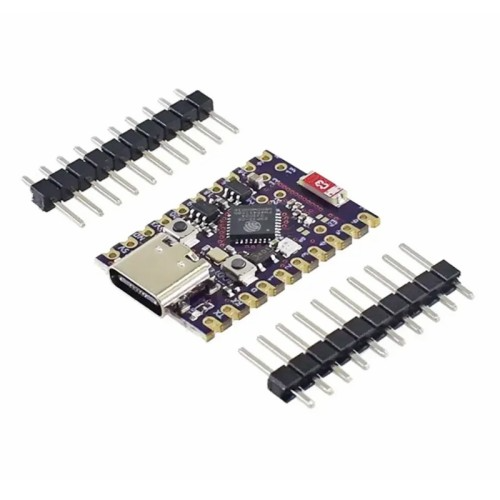
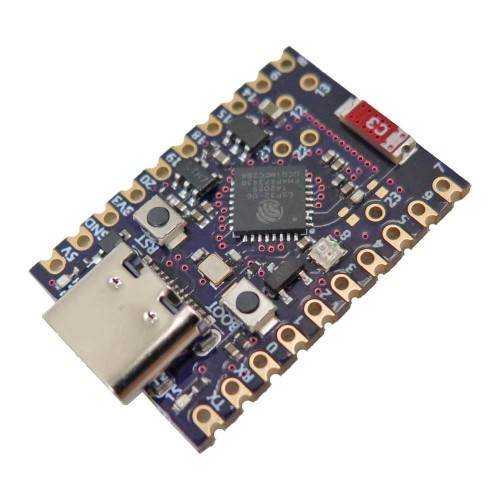
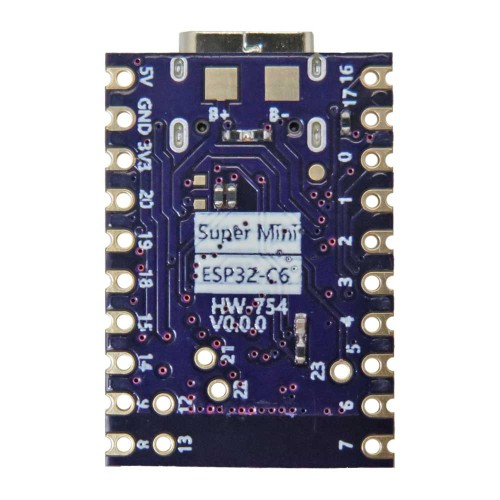
ESP32-C6 Super Mini Development Board
₹531.00 incl. GST (₹450.00 + GST)
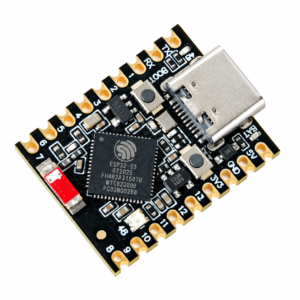
The ESP32-C6 SuperMini is a compact and powerful IoT development board featuring a 32-bit RISC-V processor up to 160 MHz with Wi-Fi 6, Bluetooth 5.3 LE, Zigbee 3.0, and Thread 1.3 connectivity. With 22 GPIOs, UART, SPI, I²C, ADC, DAC, PWM, USB Type-C, and an onboard RGB LED, it is ideal for smart home, robotics, automation, wireless sensor networks, wearables, and embedded projects. It supports Arduino IDE, ESP-IDF, and MicroPython for flexible development.
ESP32-C6 SuperMini Development Board
The ESP32-C6 SuperMini is a compact, powerful, and low-power microcontroller development board designed for modern IoT, wireless communication, embedded systems, robotics, and smart automation projects. Powered by a 32-bit RISC-V processor running at up to 160 MHz, this tiny development board combines strong processing capabilities with advanced wireless connectivity in an exceptionally small form factor.
Measuring only 18 × 26 mm, the ESP32-C6 SuperMini is ideal for projects where space, power efficiency, and wireless connectivity are important. It supports Wi-Fi 6, Bluetooth 5.3 LE, Zigbee 3.0, and Thread 1.3, making it suitable for a wide range of connected-device applications.
Powerful RISC-V Processing
At the heart of the board is a 32-bit RISC-V processor capable of operating at up to 160 MHz. With 512 KB SRAM, 16 KB low-power SRAM, and 4 MB Flash, the ESP32-C6 SuperMini provides sufficient processing and memory resources for sensor monitoring, automation, wireless communication, and embedded control applications.
Its low-power architecture also makes it suitable for battery-powered and portable IoT devices.
Advanced Wireless Connectivity
One of the key advantages of the ESP32-C6 SuperMini is its combination of modern wireless technologies:
- Wi-Fi 6 – 2.4 GHz
- Bluetooth 5.3 LE
- Zigbee 3.0
- Thread 1.3
These connectivity options allow developers to build smart home devices, wireless sensor nodes, automation systems, and other IoT products using different communication protocols.
Compact SuperMini Design
With dimensions of just 18 × 26 mm and a weight of approximately 1.9 g, the ESP32-C6 SuperMini can easily fit into compact electronic projects. Its small footprint makes it particularly useful for:
- Wearable devices
- Portable electronics
- Smart sensors
- Embedded controllers
- Miniature robotics
- Space-constrained IoT projects
Despite its small size, the board provides multiple programmable GPIOs and common peripheral interfaces.
22 Programmable GPIO Pins
The board provides 22 programmable GPIO pins, allowing it to interface with a wide range of electronic components and modules.
The available interfaces include:
- UART
- SPI
- I²C
- ADC
- DAC
- PWM
These interfaces make it possible to connect sensors, displays, motors, LEDs, relays, actuators, and other peripherals.
Arduino IDE, ESP-IDF and MicroPython Support
The ESP32-C6 SuperMini supports popular development environments, making it accessible to both beginners and experienced developers.
It can be programmed using:
- Arduino IDE
- ESP-IDF
- MicroPython
Arduino IDE provides a beginner-friendly environment for developing IoT and electronics projects, while ESP-IDF offers advanced development capabilities for professional applications. MicroPython provides a convenient way to prototype applications using Python-based programming.
USB Type-C Connectivity
The integrated USB Type-C port provides a convenient connection for powering and programming the board. It eliminates the need for a separate programming interface and makes development easier with modern USB cables.
The USB connection can be used during development for firmware uploading and serial communication, depending on the selected software configuration.
Onboard RGB LED
An integrated RGB LED provides convenient visual feedback during development and operation. It can be programmed to indicate different device states, communication status, sensor conditions, or other application-specific events.
ESP32-C6 Mesh Networking
The ESP32-C6 platform can also be used as part of wireless mesh and multi-node IoT architectures using supported networking technologies.
Multiple ESP32-C6 boards can be configured as interconnected nodes to extend wireless coverage and create distributed IoT systems. A network can include a primary node along with additional nodes that communicate within the network.
Advantages of Mesh-Based IoT Networks
- Extended network coverage across multiple nodes
- Scalable architecture for larger IoT installations
- Reliable communication between distributed devices
- Suitable for smart home and sensor networks
- Useful for multi-node automation systems
The exact mesh architecture and supported features depend on the communication protocol and software framework used in the project.
Low-Power IoT Applications
The ESP32-C6 SuperMini is designed with low-power operation in mind, making it suitable for applications where energy efficiency is important. It can be used in battery-powered sensor nodes, portable devices, environmental monitoring systems, and other applications requiring periodic wireless communication.
Key Specifications
| Specification | Details |
|---|---|
| Microcontroller | ESP32-C6 |
| Processor | 32-bit RISC-V |
| Maximum Frequency | Up to 160 MHz |
| SRAM | 512 KB |
| Low-Power SRAM | 16 KB |
| Flash | 4 MB |
| Wi-Fi | Wi-Fi 6, 2.4 GHz |
| Bluetooth | Bluetooth 5.3 LE |
| Zigbee | Zigbee 3.0 |
| Thread | Thread 1.3 |
| GPIO | 22 Programmable GPIOs |
| Interfaces | UART, SPI, I²C, ADC, DAC, PWM |
| Operating Voltage | 3–3.6V |
| Programming Interface | USB Type-C |
| LED | Onboard RGB LED |
| Dimensions | 18 × 26 mm |
| Weight | Approx. 1.9 g |
Applications
The ESP32-C6 SuperMini can be used for a wide range of electronics and IoT projects, including:
- IoT and smart home devices
- Wireless sensor networks
- Home automation systems
- Robotics and automation
- Industrial monitoring prototypes
- Environmental monitoring
- Smart lighting systems
- Wearable electronics
- Portable IoT devices
- Wireless data collection
- Embedded system development
- Educational electronics projects
- Zigbee-based devices
- Thread-based IoT projects
- Bluetooth Low Energy applications
- Wi-Fi-enabled monitoring systems
Why Choose the ESP32-C6 SuperMini?
The ESP32-C6 SuperMini combines a powerful RISC-V processor, modern wireless connectivity, multiple peripheral interfaces, and an extremely compact form factor. Its support for Wi-Fi 6, Bluetooth 5.3 LE, Zigbee 3.0, and Thread 1.3 makes it a versatile choice for next-generation IoT development.
Whether you are developing a smart home device, wireless sensor network, robotic system, wearable prototype, or embedded controller, the ESP32-C6 SuperMini provides a compact and flexible platform for bringing connected-device ideas to life.
Related Products and Categories
Explore relevant products and category pages available from Robosap.
- nanoESP32-C6 N8 ESP32 C6 Development Board with Wi-Fi 6, BLE 5, Zigbee, Thread and Dual USB Type-C
- ESP32-C5 Pro Super Mini Development Board – ESP32C5HF4 Dual-Band WiFi 6, Bluetooth 5.3, Zigbee 3.0 & Thread 1.4 – Unsoldered Header
- ESP32-C3 Super Mini USB C-Type Development Board
- ESP32 Development Boards
FAQs
1. What processor does the ESP32-C6 SuperMini use? It uses a 32-bit RISC-V processor running up to 160 MHz.
2. What wireless connectivity does it support? It supports Wi-Fi 6, Bluetooth 5.3 LE, Zigbee 3.0, and Thread 1.3.
3. How many GPIO pins are available? It provides 22 programmable GPIO pins.
4. Which programming platforms are supported? It supports Arduino IDE, ESP-IDF, and MicroPython.
5. What interfaces are available? It supports UART, SPI, I²C, ADC, DAC, and PWM.
6. What is the operating voltage? The board operates at 3–3.6V.
7. Does it have a USB Type-C port? Yes, USB Type-C is provided for power and programming.
8. What are its dimensions? The ESP32-C6 SuperMini measures approximately 18 × 26 mm.
9. Does it have an onboard LED? Yes, it includes an RGB LED for status indication and user projects.Only logged in customers who have purchased this product may leave a review.



Reviews
There are no reviews yet