
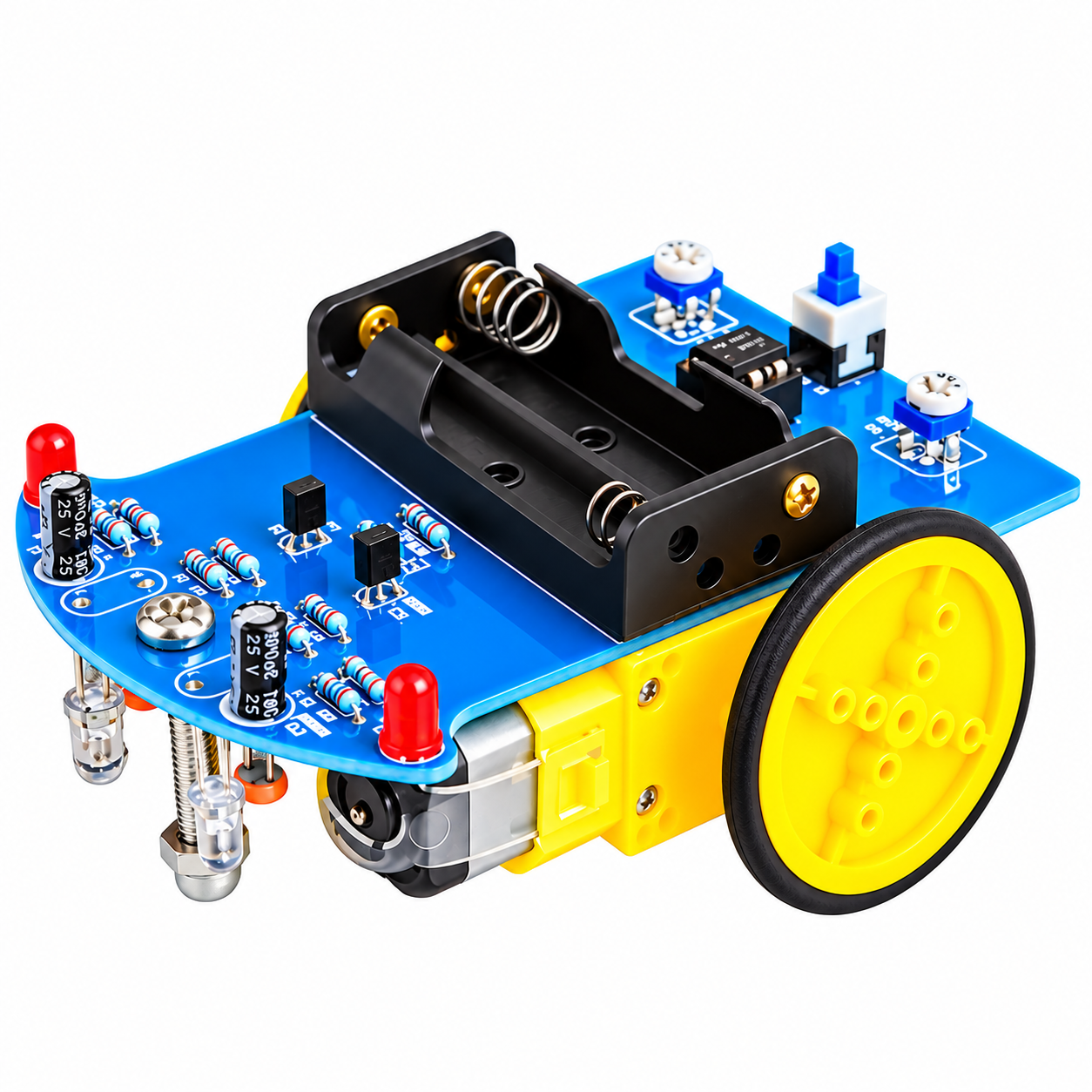
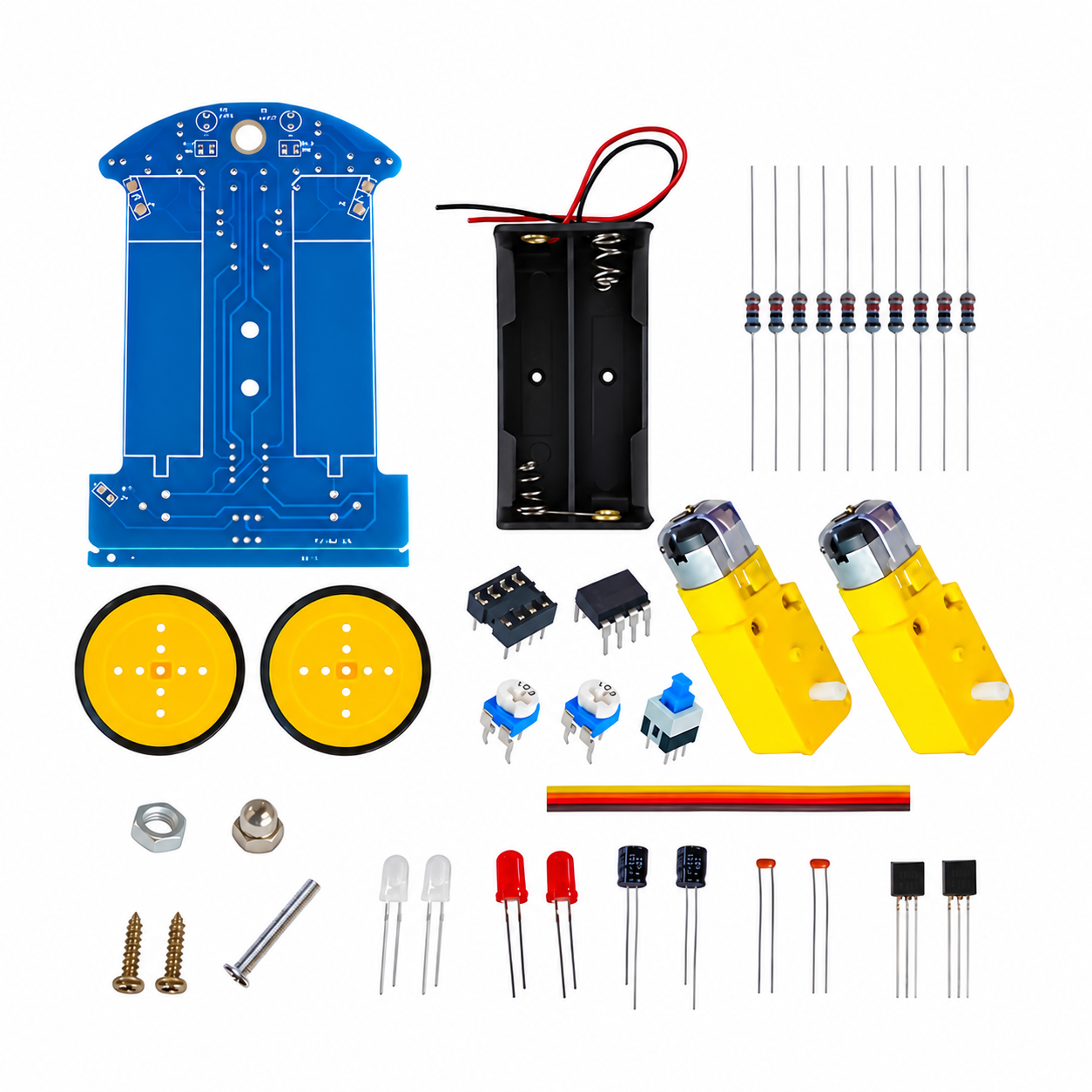
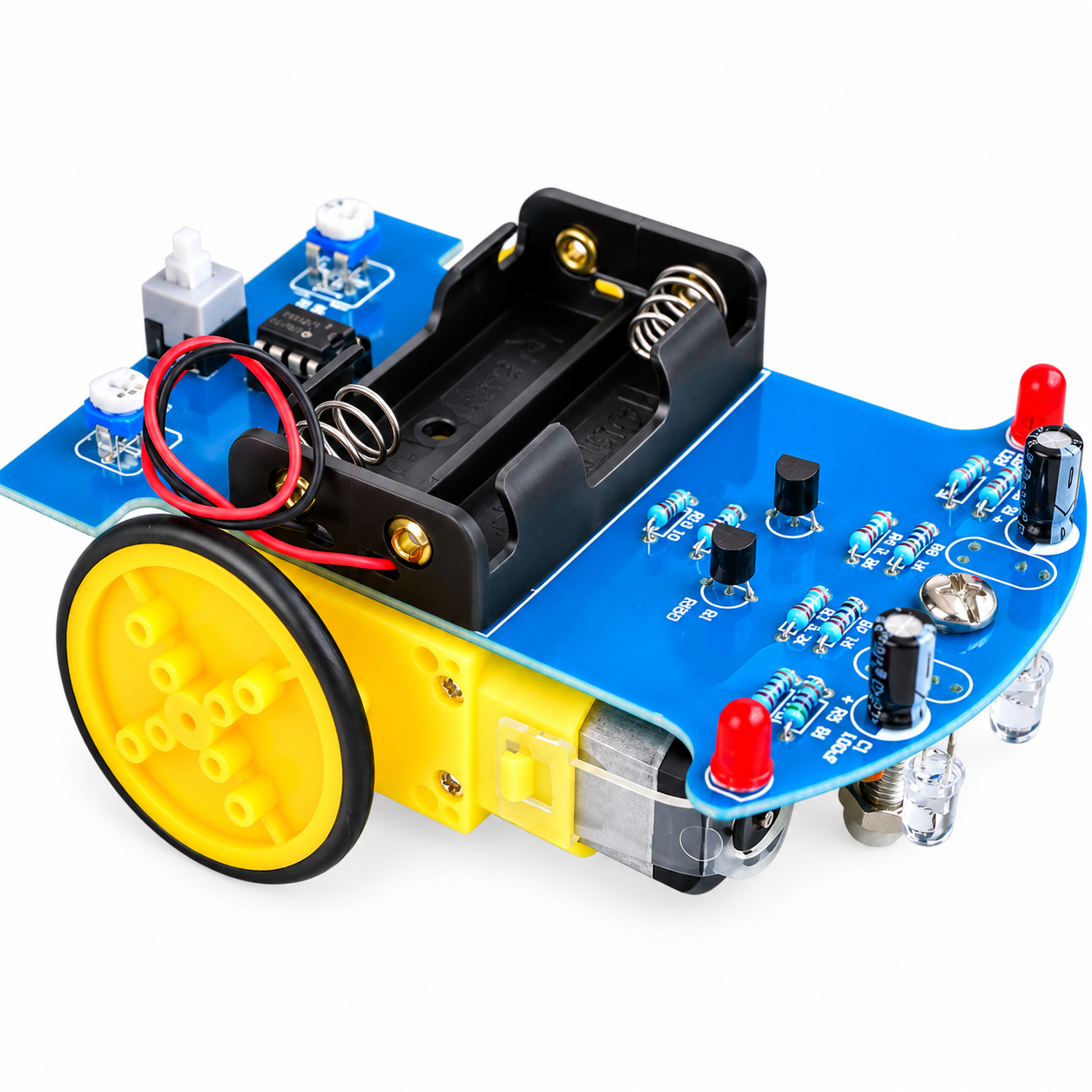
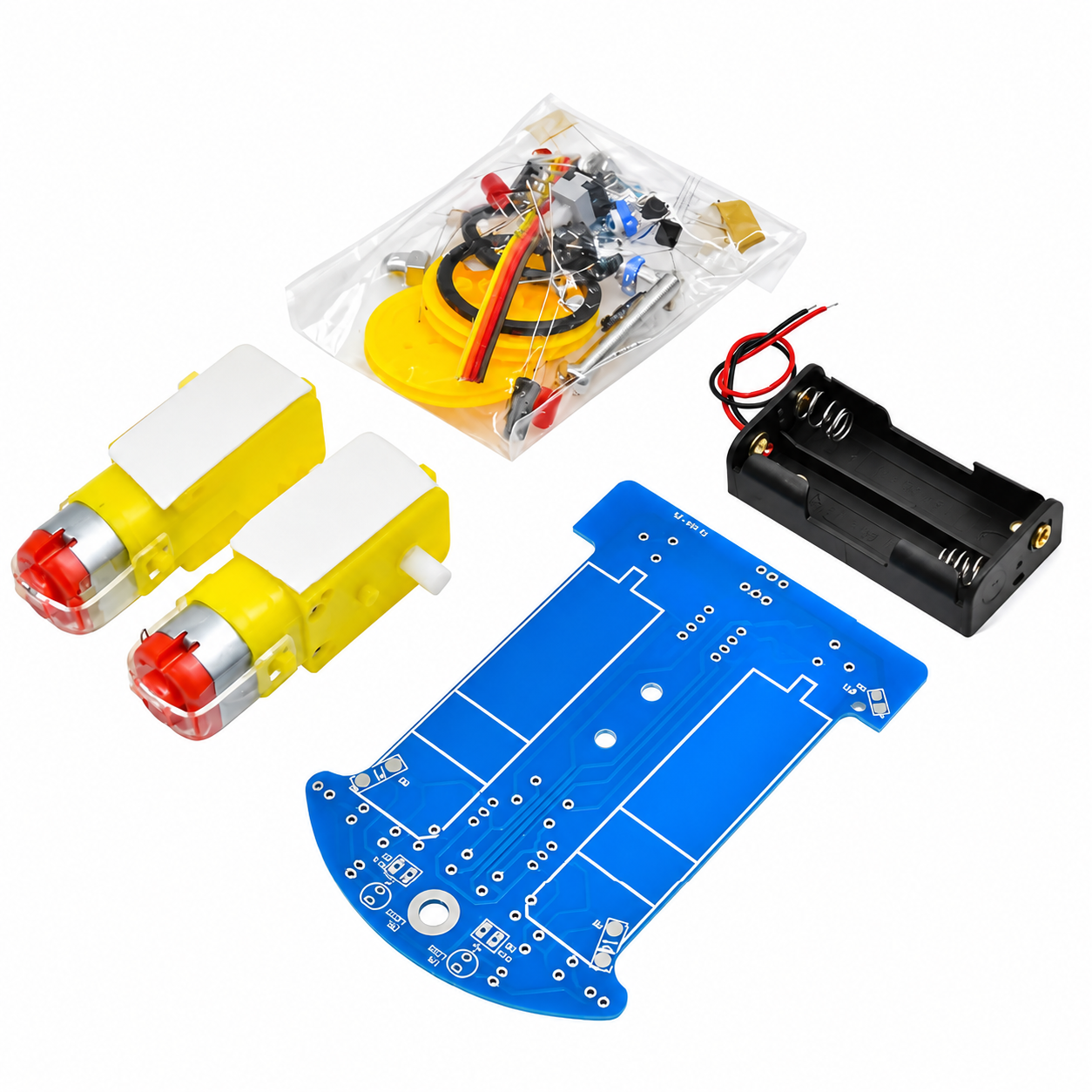
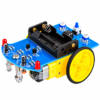
DIY D2-1 Intelligent Line Follower Robot Car Kit – No Coding Required/Tracing Car Kit
₹395.30 incl. GST (₹335.00 + GST)
The DIY D2-1 Intelligent Line Follower Robot Car Kit is an educational robotics kit designed to build an autonomous line-tracking car using two BO geared motors and an electronic control circuit. It requires no user coding or separate motor driver board and is suitable for beginners, students, and DIY electronics enthusiasts. Basic soldering and assembly are recommended. The supplied specifications list a 3.3V operating voltage, while the description mentions two AA batteries, so confirm the correct power requirements before use.
1. Product Description
The DIY D2-1 Intelligent Line Follower Robot Car Kit is an educational robotics kit designed for students, hobbyists, and beginners who want to build their own line-tracking robot. The kit includes essential components for assembling a small autonomous robot car that follows a line on a suitable surface.
Powered by two BO geared motors and an electronic line-following control circuit, the robot can detect and follow a marked path without requiring a separate motor driver board or programming. The kit is designed for hands-on assembly and requires basic soldering knowledge to connect the components correctly.
Operating from a low-voltage power supply, the kit is suitable for learning fundamental concepts in robotics, motor control, sensor-based navigation, and electronic circuit assembly. It is a practical choice for STEM education, school science projects, and introductory DIY robotics experiments.
2. Features
-
DIY Assembly: Build your own line-following robot car using the supplied components.
-
Automatic Line Tracking: Designed to follow a suitable marked path using its line-detection circuit.
-
No Coding Required: Operates using the included electronic control circuit without user programming.
-
Two BO Geared Motors: Provides motor-driven movement for the robot car.
-
No Separate Motor Driver Board Required: The kit is designed to operate without an additional motor driver board.
-
Beginner-Friendly Learning: Helps introduce robotics, electronics, and basic circuit assembly.
-
Soldering-Based Construction: Suitable for users learning practical soldering and electronic assembly.
-
Educational Project: Useful for STEM activities, school projects, and hobby robotics.
3. Specifications
| Parameter | Details |
|---|---|
| Product Name | DIY D2-1 Intelligent Line Follower / Tracking Smart Car Kit |
| Product Type | DIY Robot Car Kit |
| Robot Function | Line following / line tracking |
| Motor Type | BO geared motors |
| Number of Motors | 2 |
| Stated Power Supply | 3.3V |
| Battery Type Mentioned | 2 × AA batteries |
| Programming Requirement | No user coding required |
| Separate Motor Driver Board | Not required, as specified |
| Assembly | DIY assembly with basic soldering |
| Shipping Weight | 0.43 kg |
| Shipping Dimensions | 7 × 4 × 2 cm, as supplied |
| Model | D2-1 |
Power supply note: The description mentions both a 3V supply from two AA batteries and a 3.3V operating voltage. Confirm the actual operating voltage and battery arrangement against the kit’s circuit instructions before powering it.
4. Design and Construction
The kit is designed around a compact robot car structure with two BO geared motors and an electronic line-following control circuit. The motors provide movement, while the line-detection components sense the marked path and help the circuit adjust the robot’s movement.
The DIY assembly format gives users practical experience with component placement, soldering, wiring, and basic electronic troubleshooting. The supplied components are intended to form a functional line-following robot without requiring a separate programmable controller or external motor driver board.
5. Working Principle
The robot uses line-detection components and an electronic control circuit to follow a marked path.
-
Line Detection: The sensing circuit detects the contrast between the marked line and the surrounding surface.
-
Signal Processing: The control circuit interprets the sensor signals.
-
Motor Control: The circuit controls the two BO geared motors to guide the robot along the path.
-
Automatic Tracking: As the line direction changes, the robot adjusts its movement according to the sensor signals.
The robot works best on a clearly visible, high-contrast line and a suitable flat surface. Actual tracking performance depends on the line colour, surface, sensor adjustment, assembly, and battery condition.
6. Applications
-
STEM Education: Introduces students to basic robotics and automation.
-
School Science Projects: Suitable for line-following robot demonstrations.
-
DIY Robotics: Provides a starting point for hands-on robot construction.
-
Electronics Learning: Helps users practise soldering and circuit assembly.
-
Robotics Workshops: Useful for beginner-level practical activities.
-
Hobby Projects: Suitable for experimenting with autonomous movement and line tracking.
-
Engineering Demonstrations: Illustrates the relationship between sensors, control circuits, and motors.
7. Assembly and Usage
-
Assemble the kit according to the supplied instructions or circuit diagram.
-
Use basic soldering tools and follow appropriate soldering safety practices.
-
Check the motor connections and sensor placement before powering the robot.
-
Use the specified battery arrangement and operating voltage.
-
Test the robot on a flat surface with a clearly defined line.
-
Adjust sensor position or sensitivity if the design provides adjustment options.
Note: Basic soldering knowledge is recommended. A soldering iron, batteries, and other assembly tools should not be assumed to be included unless stated by the seller.
8. Package Includes
– 1 × DIY D2-1 Intelligent Line Follower / Tracking Car Kit
The supplied listing does not separately itemise the individual components. Confirm whether batteries, chassis parts, sensors, screws, and assembly instructions are included before ordering.
9. Product Disclaimer
-
This is a DIY assembly kit and may require soldering and manual assembly before operation.
-
The supplied information lists a 3.3V operating voltage but also describes operation from two AA batteries providing approximately 3V. Confirm the correct supply requirements before use.
-
Line-following performance depends on the surface, line contrast, sensor placement, circuit assembly, and battery condition.
-
Shipping dimensions and weight are reproduced from the supplied specifications and may need verification.
-
Product images are for illustration and representation purposes only. The actual product may slightly differ in appearance, colour, design, or component placement due to manufacturing variations and production batches.
Frequently Asked Questions (FAQs)
1. What is the DIY D2-1 Intelligent Line Follower Robot Car Kit? It is a DIY robotics kit designed to build a small robot car that automatically follows a marked line. 2. Does the robot follow a line automatically? Yes. The included line-detection and control circuit is designed to guide the robot along a suitable marked path. 3. Do I need to write code to operate the robot? No user coding is required according to the supplied product description. The kit uses an electronic control circuit for line tracking. 4. Does it require a separate motor driver board? No separate motor driver board is specified as necessary for this kit. 5. What type of motors are included? The kit is specified to use BO geared motors. 6. How many motors does the robot use? The supplied description specifies two BO geared motors. 7. What is the operating voltage? The specification lists 3.3V, while the description mentions a 3V supply from two AA batteries. Confirm the correct voltage from the kit instructions before powering it. 8. Are batteries included? The package description does not confirm whether batteries are included. Check the seller's package details before ordering. 9. Is soldering required? Basic soldering is recommended for assembling the kit, as stated in the product description. 10. Is this kit suitable for beginners? Yes. It is designed as an introductory DIY robotics project, although beginners may need help with soldering and assembly. 11. Can students use this kit for science projects? Yes. It is suitable for educational demonstrations involving robotics, sensors, motor control, and autonomous navigation. 12. What type of surface does the robot need? A flat surface with a clearly visible, high-contrast line is generally best for line-following operation. 13. Can it follow a black line on a white surface? That is a common line-following setup. Actual compatibility depends on the sensing components and circuit supplied with the kit. 14. Can it follow a white line on a black surface? This depends on the sensor and circuit configuration. Check the kit instructions for supported line and surface combinations. 15. Does it use sensors? Yes. Line-detection components are needed for the robot's line-following function, although the supplied listing does not identify the exact sensor model. 16. Can I change the robot's speed? Adjustable speed control is not specified in the supplied information. The speed will depend on the motors, supply voltage, and control circuit. 17. Can the robot turn at corners? The robot is designed to follow a line, including suitable turns, but its ability to negotiate sharp corners depends on the track and sensor arrangement. 18. Can I use rechargeable AA batteries? Only if the battery voltage and current capability meet the kit's requirements. Confirm the supported supply voltage before using rechargeable batteries. 19. What happens when the battery voltage becomes low? The motors may slow down and tracking performance may become less reliable as the supply voltage drops. 20. Does the kit include a chassis? The listing identifies the product as a complete DIY car kit but does not itemise the chassis separately. Confirm the included parts with the seller. 21. Are screws and mounting hardware included? The individual hardware items are not listed separately. Verify the package contents before ordering. 22. Are assembly instructions included? The supplied description does not explicitly confirm whether printed or digital instructions are included. Check with the seller. 23. Do I need an Arduino or ESP32? No. The kit is described as operating without user coding, so a separate Arduino or ESP32 is not specified as necessary. 24. Can I add an Arduino or ESP32 later? Potential modifications depend on the supplied circuit, motor connections, and sensors. Additional controllers may require circuit changes and compatible motor-control electronics. 25. Is the kit suitable for robotics workshops? Yes. It can be used for introductory robotics workshops and practical electronics learning. 26. Can it be used for line-following competitions? It may be suitable for basic demonstrations, but competition use depends on speed, turning performance, reliability, and the rules of the event. 27. Does the robot require Wi-Fi or Bluetooth? No wireless connectivity is specified. The kit is designed for basic autonomous line-following operation. 28. What is the shipping weight? The supplied specification lists a shipping weight of 0.43 kg. 29. What are the shipping dimensions? The listing gives dimensions of 7 × 4 × 2 cm. These dimensions appear small for a complete car kit, so verify them with the seller. 30. What is included in the package? The listing specifies one DIY D2-1 Intelligent Line Follower / Tracking Car Kit. Confirm the individual components and whether batteries or tools are included. 31. Is this kit suitable for learning soldering? Yes. Its assembly can provide practical soldering experience, provided the user follows safe soldering practices. 32. Can the robot work on uneven surfaces? It is best tested on a flat, smooth surface. Uneven surfaces may affect wheel traction, sensor distance, and line tracking. 33. Can it detect any colour line? Line detection depends on the contrast between the line and the background, as well as the sensor's characteristics. Not every colour combination will work reliably. 34. Does the kit need programming software? No programming software is specified as necessary for the basic line-following function. 35. What should I check before powering it on? Check the solder joints, wiring, motor connections, sensor placement, and specified supply voltage before switching it on.Only logged in customers who have purchased this product may leave a review.


Reviews
There are no reviews yet