
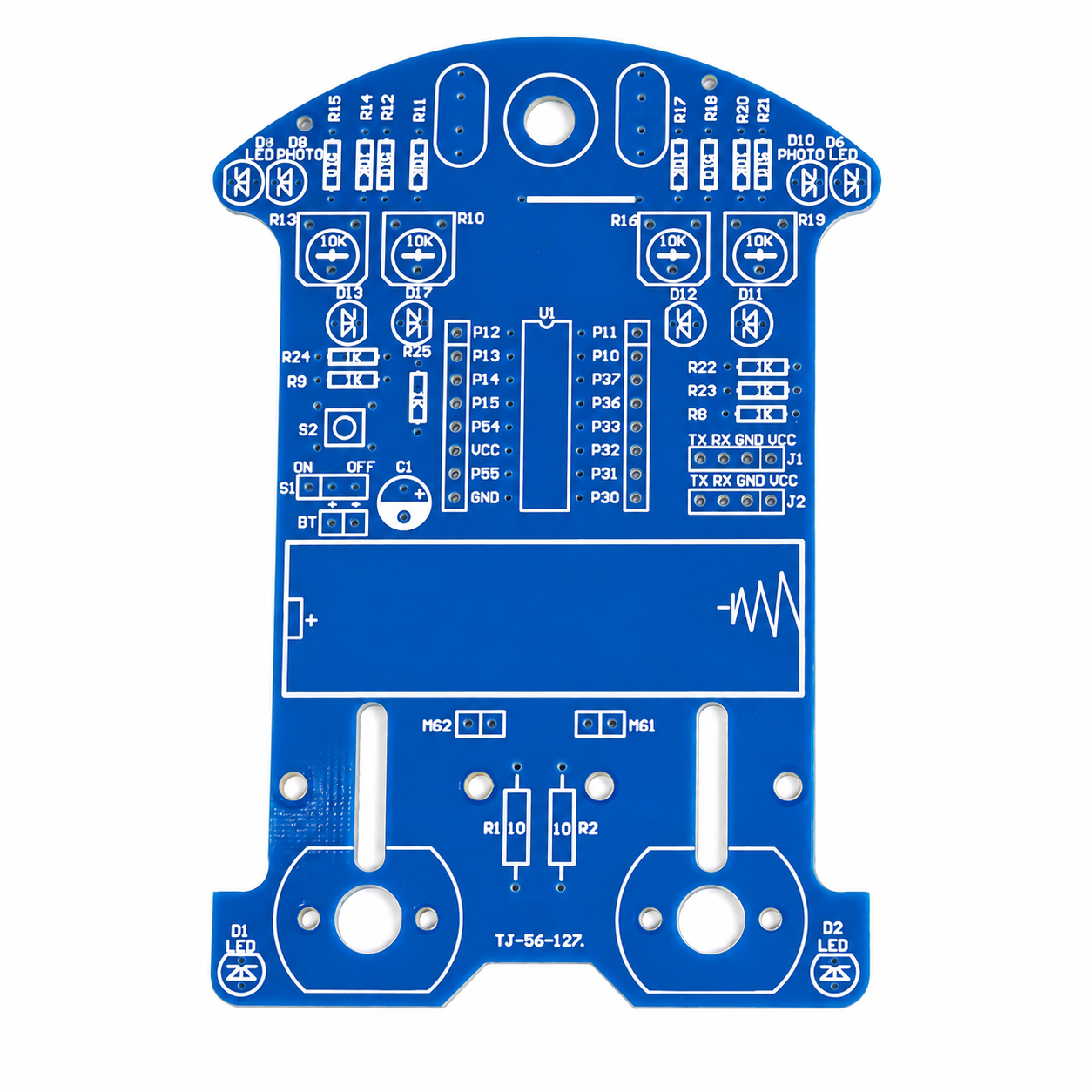
D2-6 Bluetooth Remote Control Intelligent Car 51 MCU DIY Kit – Tracking, Obstacle Avoidance and Gravity Control
₹826.00 incl. GST (₹700.00 + GST)
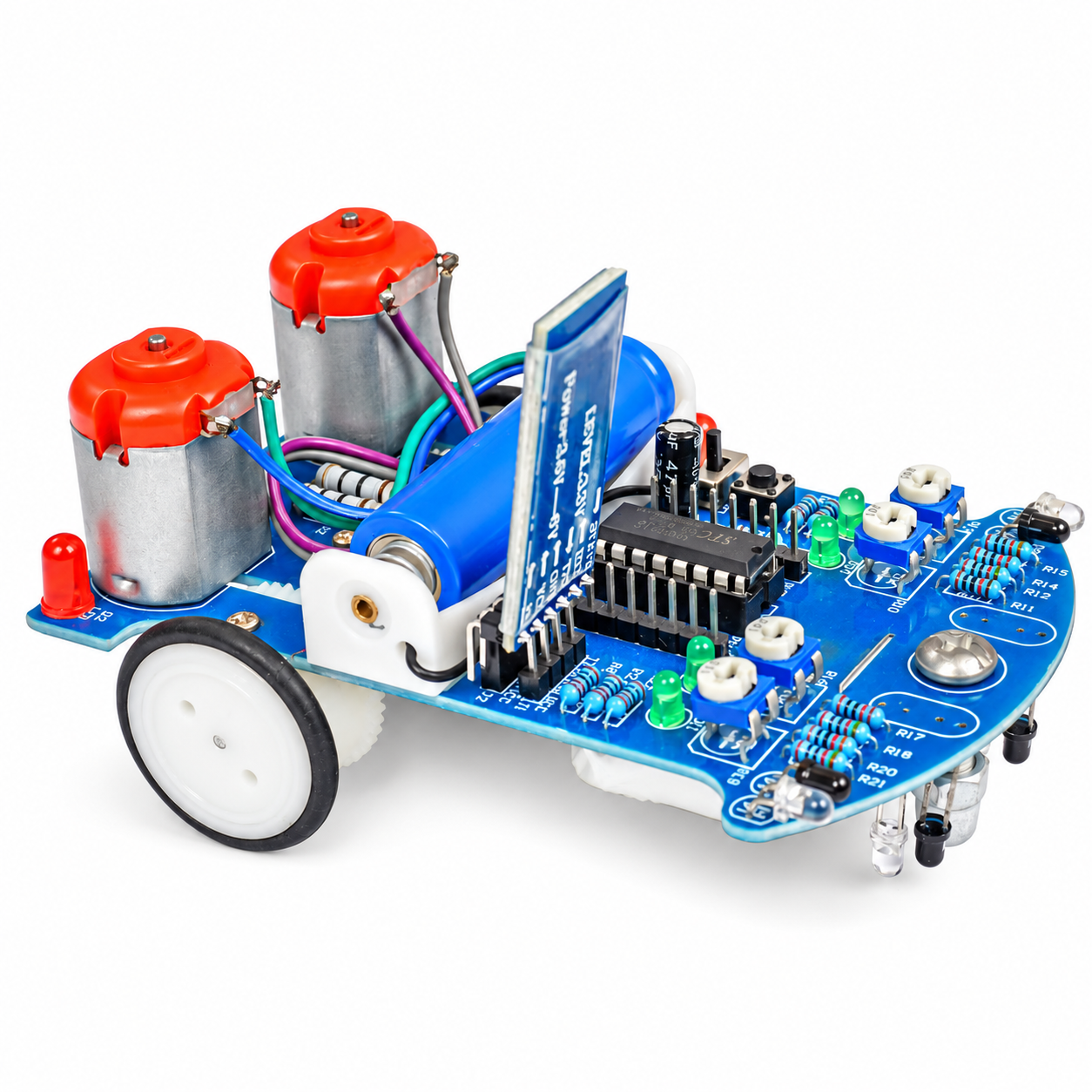
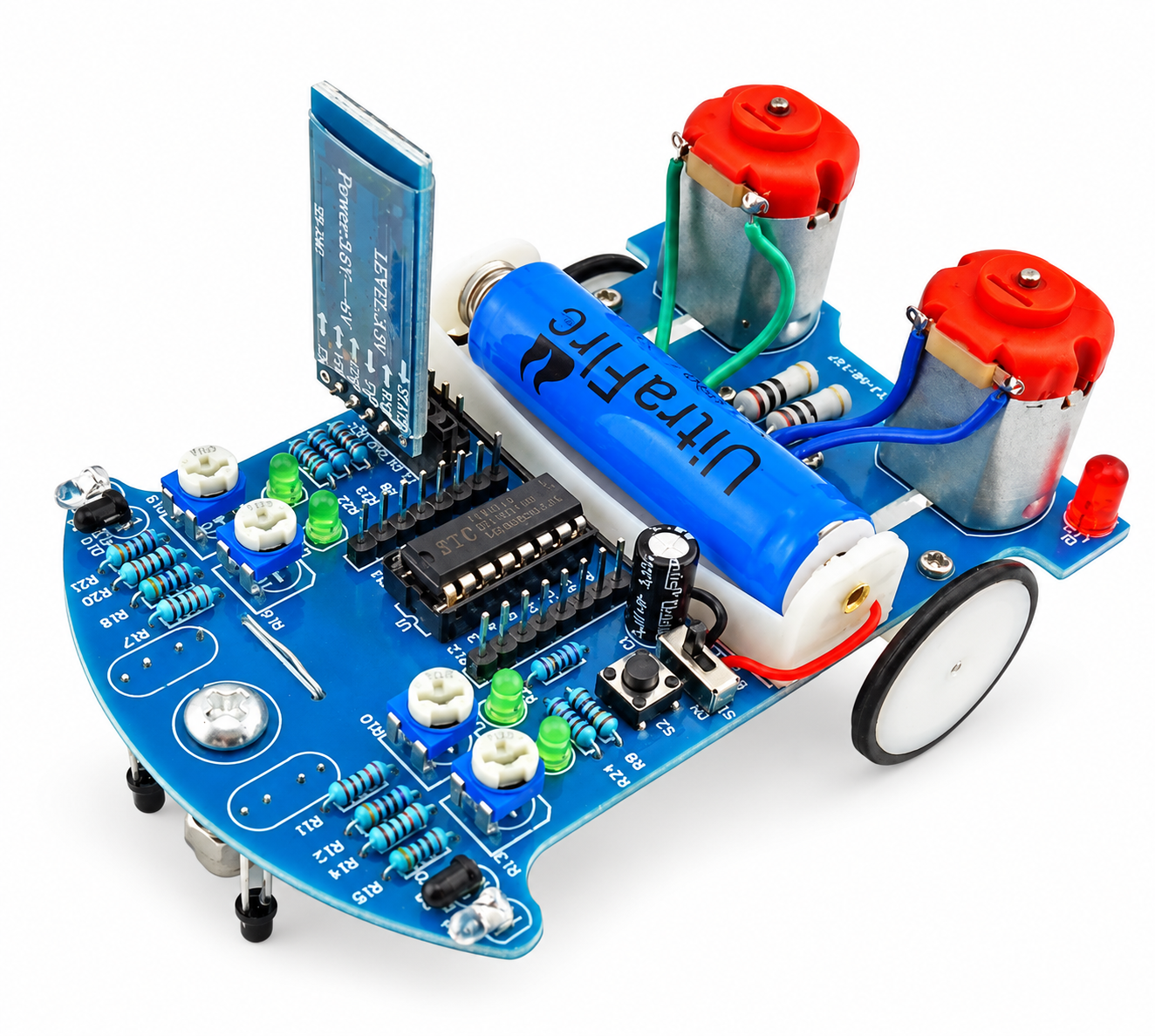
The D2-6 Bluetooth Remote Control Intelligent Car 51 MCU DIY Kit is a multifunctional robotics kit featuring a pre-programmed 51-series microcontroller and support for Bluetooth phone control, line tracking, obstacle avoidance, and gravity-induction control. It supports forward and backward movement and is designed for DIY assembly with basic soldering skills. The stated operating voltage is 3.7V DC, with a rechargeable lithium battery mentioned in the product description. Confirm battery inclusion, Bluetooth module compatibility, and the exact package contents before ordering.
1. Product Description
The D2-6 Bluetooth Remote Control Intelligent Car 51 MCU DIY Kit is an educational robotics kit designed for students, hobbyists, and electronics enthusiasts who want to build a multifunctional smart robot car. Based on a pre-programmed 51-series microcontroller (MCU), the kit supports multiple operating modes, including line tracking, obstacle avoidance, Bluetooth mobile phone control, and gravity-based control.
Unlike basic line-following robot kits, the D2-6 combines autonomous navigation with wireless remote-control functionality. Through a compatible Bluetooth module and mobile phone, users can control the car’s movement, including forward and backward motion. The kit operates from a stated 3.7V DC rechargeable lithium battery supply and is designed for DIY assembly with basic soldering skills.
This kit provides hands-on experience with microcontrollers, motor control, Bluetooth communication, sensor-based navigation, and robotics assembly. It is suitable for educational projects, STEM learning, robotics demonstrations, and hobby experimentation.
2. Features
-
51-Series MCU Control: Uses a pre-programmed microcontroller as the main control unit.
-
Bluetooth Remote Control: Supports wireless control through a compatible Bluetooth module and mobile phone.
-
Line Tracking Mode: Designed to follow a marked path using its tracking sensors.
-
Obstacle Avoidance: Supports obstacle detection and avoidance through the supplied sensing system.
-
Gravity Induction Control: Supports movement control through compatible gravity-based mobile phone input.
-
Forward and Backward Movement: Offers forward and reverse movement, along with other supported driving functions.
-
Rechargeable Battery Operation: Designed for a 3.7V rechargeable lithium battery supply, as specified.
-
Serial Interface: Provides a serial interface for connecting the Bluetooth module.
-
DIY Assembly: Requires basic soldering and component assembly skills.
-
Educational Robotics Platform: Helps users learn about embedded systems, sensors, wireless control, and motor operation.
3. Specifications
| Parameter | Details |
|---|---|
| Product Name | D2-6 Bluetooth Remote Control Intelligent Car 51 MCU DIY Kit |
| Product Type | DIY Smart Robot Car Kit |
| Main Controller | Pre-programmed 51-series MCU |
| Connecting Mode | Bluetooth |
| Operating Voltage | 3.7V DC, as specified |
| Battery Type | Rechargeable lithium battery, as described |
| Control Modes | Bluetooth remote control, line tracking, obstacle avoidance, gravity induction |
| Movement | Forward and backward; additional movement depends on the supplied control system |
| Bluetooth Interface | Serial interface |
| Assembly | DIY assembly with basic soldering |
| Programming Requirement | Pre-programmed MCU; user programming not specified as necessary |
| Shipping Weight | 0.4 kg |
| Shipping Dimensions | 10 × 8 × 4 cm |
Power supply note: The product description mentions a 3.7V rechargeable lithium battery but also refers to an “AA battery.” These details may be inconsistent. Confirm the correct battery type, size, and whether the battery is included before powering the kit.
4. Design and Construction
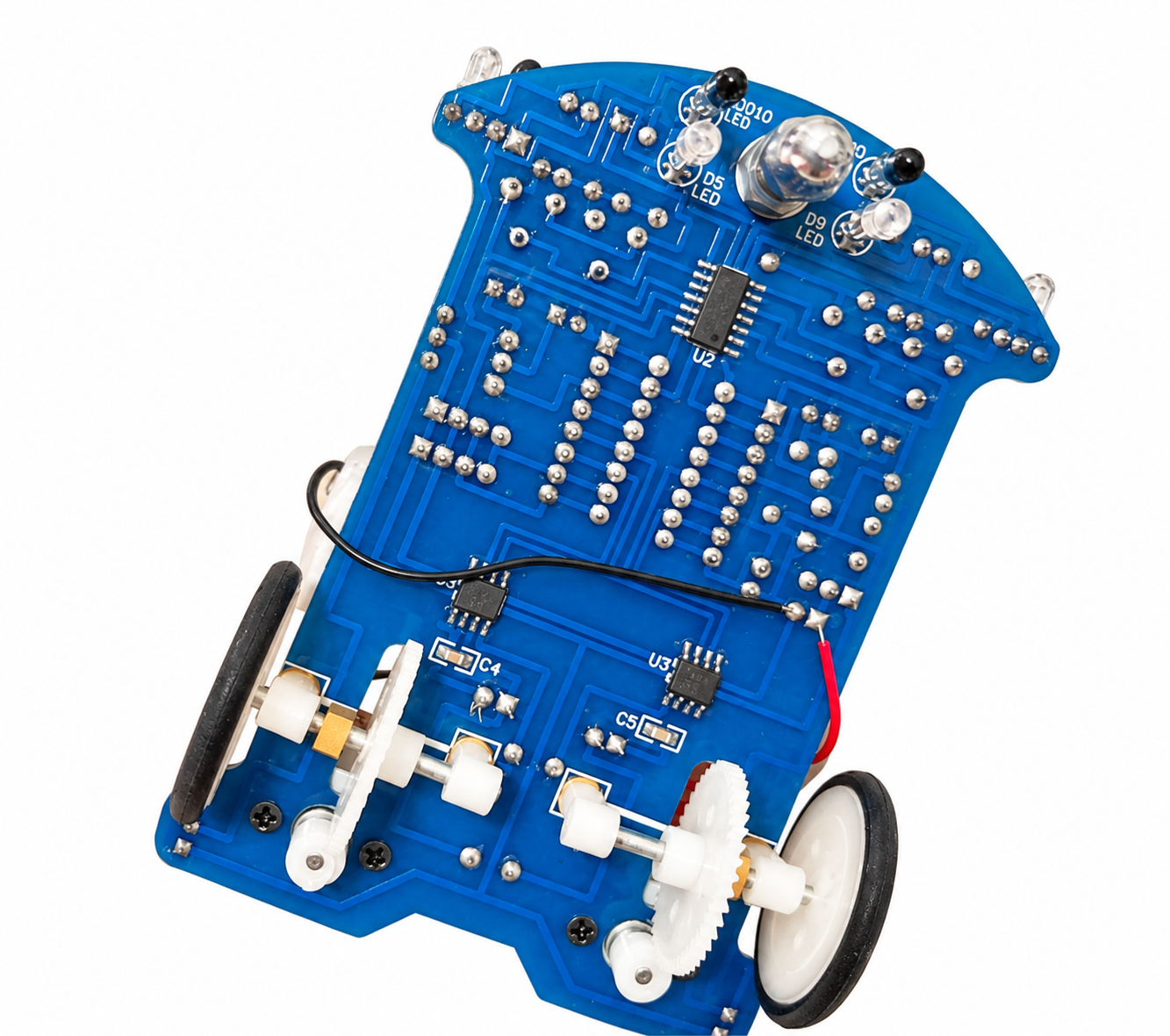
The D2-6 is designed around a pre-programmed 51-series microcontroller that coordinates the robot’s movement and operating modes. The control circuit works with the motors, line-tracking sensors, obstacle-detection components, and Bluetooth interface to provide different ways of operating the car.
The serial interface allows a compatible Bluetooth module to communicate with the controller. When paired with a supported mobile phone application, the car can receive wireless driving commands. The DIY format provides practical experience in soldering, component installation, wiring, and basic electronics troubleshooting.
The exact chassis material, motor specifications, sensor models, Bluetooth module version, and battery capacity are not specified in the supplied product information.
5. Working Principle
The D2-6 uses a pre-programmed microcontroller to process sensor inputs and control the car’s motors.
Bluetooth Remote-Control Mode
A compatible mobile phone sends movement commands through a Bluetooth module connected to the serial interface. The microcontroller interprets these commands and controls the motors to move the car.
Line-Tracking Mode
The tracking sensors detect the marked path on the surface. The microcontroller processes the sensor signals and adjusts the motors to help the car follow the line.
Obstacle-Avoidance Mode
The obstacle-detection system senses objects in the car’s path. The controller then adjusts the car’s movement according to the pre-programmed obstacle-avoidance behaviour.
Gravity-Induction Control Mode
A compatible mobile phone application uses motion or orientation input to send control commands over Bluetooth. The car responds to these commands according to its programmed control logic.
6. Applications
-
STEM Education: Introduces students to robotics, microcontrollers, and automation.
-
DIY Robotics Projects: Provides a platform for building and testing a multifunctional robot car.
-
Bluetooth-Controlled Vehicles: Demonstrates wireless control using a mobile phone.
-
Line-Following Experiments: Helps learners understand sensor-based navigation.
-
Obstacle-Avoidance Projects: Demonstrates automated movement around obstacles.
-
Embedded Systems Learning: Introduces microcontroller-based control systems.
-
Electronics Workshops: Suitable for soldering practice and component assembly.
-
Engineering Demonstrations: Useful for demonstrating multiple robot operating modes.
7. Assembly and Usage
-
Assemble the kit according to the supplied instructions and circuit diagram.
-
Solder the components carefully, ensuring correct polarity and secure connections.
-
Check the motor wiring, sensors, controller connections, and Bluetooth interface.
-
Confirm the correct battery type and voltage before powering the car.
-
Pair the Bluetooth module with a compatible mobile phone application, following the supplied instructions.
-
Test each available operating mode on a suitable surface.
Note: Basic soldering skills are recommended. A soldering iron, batteries, charging equipment, and other tools should not be assumed to be included unless specified by the seller.
8. Package Includes
– 1 × D2-6 3.7V Bluetooth Remote Control Intelligent Car 51 MCU DIY Kit
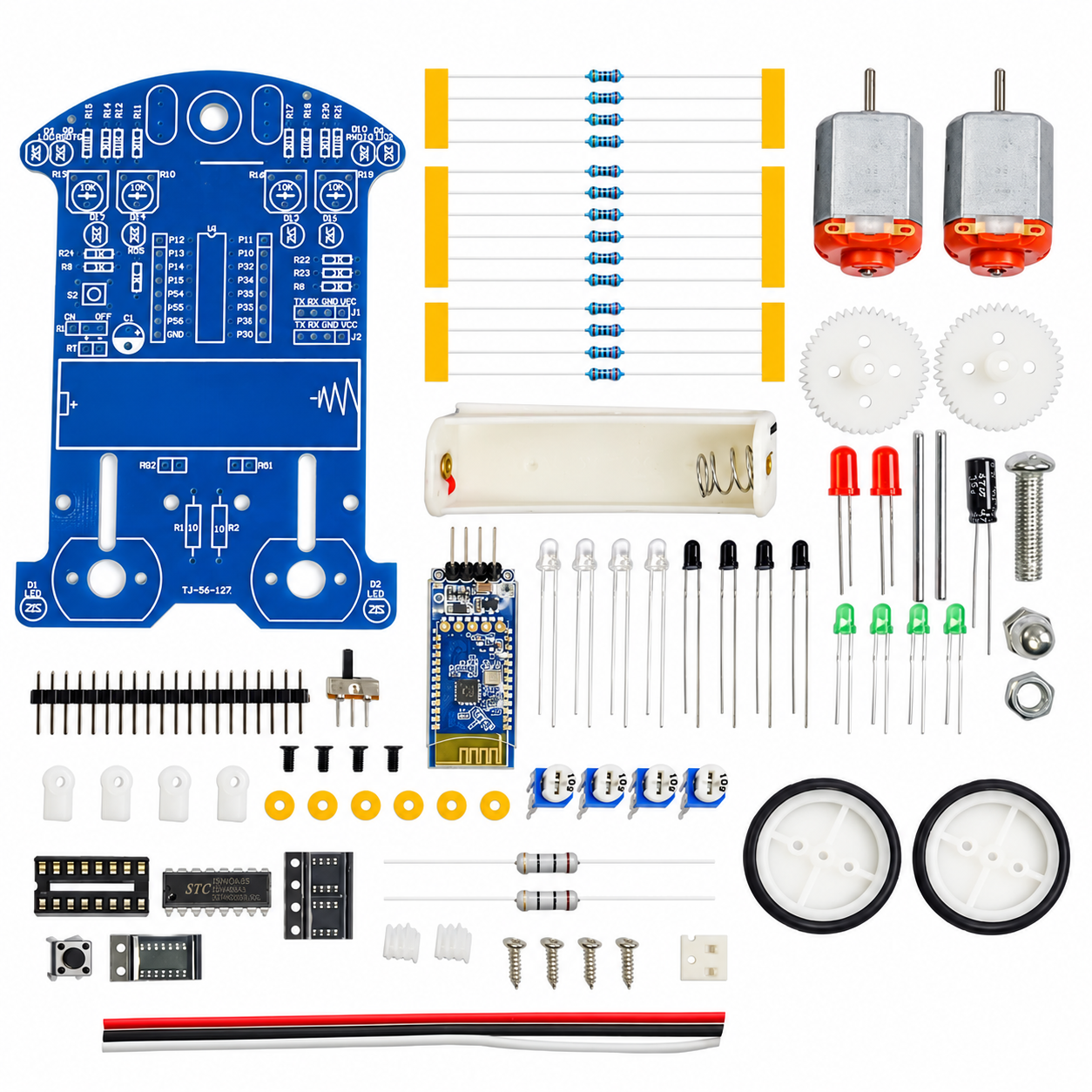
The individual components and accessories are not itemised in the supplied package details. Confirm whether the battery, Bluetooth module, charger, chassis parts, sensors, and assembly instructions are included.
9. Product Disclaimer
-
The product is a DIY assembly kit and may require soldering before operation.
-
The listed operating voltage is 3.7V DC. Verify the battery type and polarity before connecting the power supply.
-
Bluetooth control requires a compatible Bluetooth module and mobile phone application. Phone and application compatibility should be confirmed before purchase.
-
The listed control modes depend on the components and firmware supplied with the kit.
-
The supplied information does not specify battery capacity, charging method, motor ratings, Bluetooth range, or sensor specifications.
-
Product images are for illustration and representation purposes only. The actual product may slightly differ in appearance, colour, design, or component placement due to manufacturing variations and production batches.
Frequently Asked Questions (FAQs)
1. What is the D2-6 Bluetooth Remote Control Intelligent Car Kit?
It is a DIY robot car kit based on a pre-programmed 51-series microcontroller, designed to support Bluetooth control, line tracking, obstacle avoidance, and gravity-induction control.2. What is the main controller used in this kit?
The supplied description specifies a pre-programmed 51-series microcontroller (MCU).3. Does the kit require programming?
The controller comes pre-programmed, so user programming is not specified as necessary for its advertised functions.4. What control modes are supported?
The listed modes are Bluetooth mobile phone control, line tracking, obstacle avoidance, and gravity-induction control.5. Can I control the car using a mobile phone?
Yes. The kit is designed for mobile phone control through a compatible Bluetooth module and application.6. Does the kit include Bluetooth connectivity?
The product description specifies a serial interface for connecting a Bluetooth module. Confirm whether the Bluetooth module itself is included in the package.7. What is the operating voltage?
The stated operating voltage is 3.7V DC.8. What type of battery does the car use?
The description refers to a rechargeable lithium battery, but also mentions an AA battery. Confirm the exact battery type and size with the seller before use.9. Is the battery included?
The package listing does not explicitly confirm whether the battery is included. Check the seller's package details before ordering.10. Can the car move forward and backward?
Yes. The product description specifically mentions forward and backward movement.11. Can the car turn left and right?
Turning is common in remote-controlled robot cars, but the supplied specification does not explicitly list individual turning commands. Confirm the available controls for this kit.12. What is line-tracking mode?
Line-tracking mode uses sensors to detect a marked path and adjusts the motors so the car can follow the line automatically.13. Does the car support obstacle avoidance?
Yes. Obstacle avoidance is one of the advertised operating modes and relies on the supplied obstacle-detection system.14. How does obstacle avoidance work?
The obstacle-detection components detect objects in the car's path. The pre-programmed controller then changes the car's movement according to its programmed behaviour.15. What is gravity-induction control?
Gravity-induction control uses the movement or orientation of a compatible mobile phone to send driving commands to the robot through Bluetooth.16. Do I need a special mobile phone application?
A compatible application is required for phone-based Bluetooth or gravity control. The supplied information does not identify the application name, so confirm it with the seller.17. Is the kit compatible with Android phones?
Compatibility depends on the Bluetooth module and the mobile application supplied or recommended for the kit. Confirm the supported phone platforms before purchase.18. Is the kit compatible with iPhones?
iPhone compatibility is not specified. It depends on the Bluetooth module, Bluetooth profile, and compatible control application.19. Does assembly require soldering?
Yes. The product description states that some soldering skill is needed to assemble the kit.20. Is this kit suitable for beginners?
It can be suitable for beginners who are comfortable with basic electronics assembly. Users without soldering experience may benefit from supervision.21. Is the kit suitable for school projects?
Yes. It is suitable for educational robotics demonstrations and projects involving sensors, microcontrollers, motor control, and wireless communication.22. Can I use it for college robotics projects?
Yes. It can serve as a basic platform for learning and demonstrating autonomous navigation and Bluetooth-controlled movement.23. Does it require an Arduino?
No Arduino is specified as necessary. The kit uses its own pre-programmed 51-series microcontroller.24. Can I modify the program?
The supplied description does not specify whether the firmware can be reprogrammed or whether programming access is provided. Check the controller and documentation before planning modifications.25. Does the kit have a serial interface?
Yes. The supplied description states that a serial interface is available for connecting the Bluetooth module.26. What motors are used in the car?
The motor type and specifications are not provided in the supplied product information. Confirm the motor details with the seller if replacements or upgrades are required.27. Does the kit include sensors?
The advertised line-tracking and obstacle-avoidance functions require sensing components. However, the supplied package details do not itemise the sensors individually.28. Can the car run without Bluetooth?
The kit advertises autonomous line-tracking and obstacle-avoidance modes in addition to Bluetooth control. Their availability without a phone depends on the supplied circuit and operating instructions.29. What is the Bluetooth operating range?
The Bluetooth range is not specified. Actual range depends on the Bluetooth module, phone, antenna arrangement, and surrounding environment.30. Can the car be used outdoors?
It may operate on suitable outdoor surfaces, but the kit's weather resistance and environmental protection are not specified. A flat, dry surface is recommended.31. Can the car follow a black line on a white surface?
That is a common line-following arrangement. Actual performance depends on the tracking sensor and its configuration.32. Can the car avoid every obstacle?
No. Obstacle avoidance depends on the sensor type, detection range, obstacle characteristics, and programmed response. It should not be expected to detect every object.33. Does the kit include a battery charger?
The supplied package details do not confirm whether a charger is included. Verify this before ordering or charging the battery.34. What tools are required for assembly?
Basic soldering tools may be needed, along with suitable hand tools for assembly. The package details do not specify whether tools are included.35. Is the car rechargeable?
The description states that it uses a rechargeable lithium battery. Confirm the correct charging method and whether a battery and charger are supplied.36. What is the shipping weight?
The stated shipping weight is 0.4 kg.37. What are the shipping dimensions?
The listed shipping dimensions are 10 × 8 × 4 cm. Confirm these measurements with the seller if packaging dimensions are important.38. What is included in the package?
The listing specifies one D2-6 3.7V Bluetooth Remote Control Intelligent Car 51 MCU DIY Kit. Individual components and accessories should be confirmed with the seller.39. What should I check before powering the kit?
Check the solder joints, wiring, battery polarity, operating voltage, motor connections, and sensor connections. Follow the supplied assembly instructions.40. What makes the D2-6 different from a basic line-following car kit?
The D2-6 advertises multiple operating modes, including Bluetooth remote control, obstacle avoidance, line tracking, and gravity-induction control, rather than line tracking alone.Only logged in customers who have purchased this product may leave a review.




Reviews
There are no reviews yet