
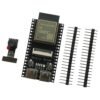
ESP32-S3-N16R8 Development Board with RHYX-M21-45 Camera
₹991.20 incl. GST (₹840.00 + GST)
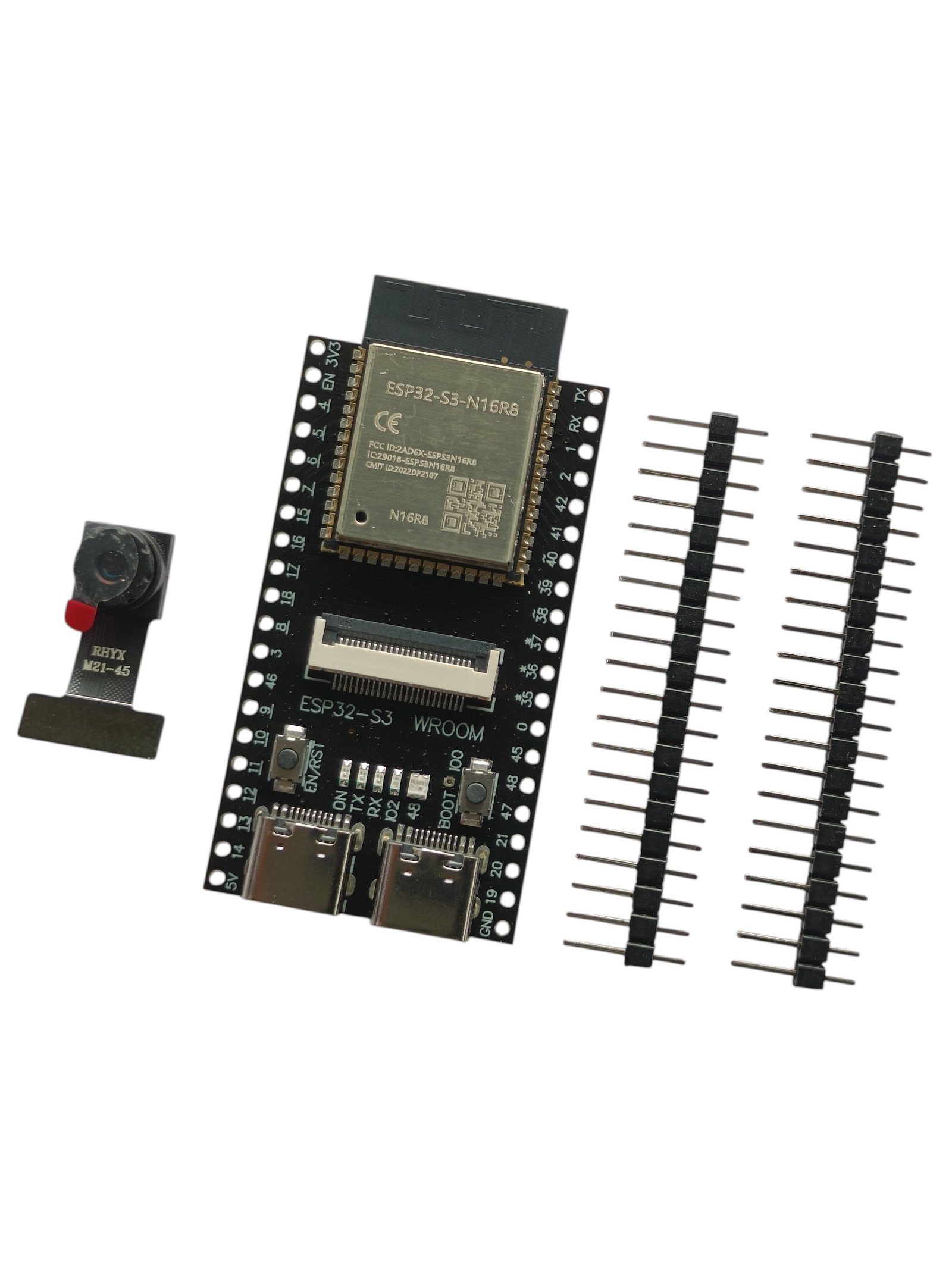
The ESP32-S3-N16R8 Development Board is a powerful dual-core development board featuring the ESP32-S3 processor up to 240MHz, 8MB Flash, and 8MB PSRAM. It includes Wi-Fi, Bluetooth 5.0 BLE, 45 GPIOs, camera interface, and dual USB Type-C ports, making it ideal for AI vision, image processing, IoT, and edge-computing applications. Compatible with Arduino IDE, ESP-IDF, and MicroPython, it supports projects such as face recognition, object detection, robotics, and smart automation. The package includes an RHYX-M21-45 camera and two 20-pin male header strips.
The ESP32-S3-N16R8 Development Board is a high-performance dual-core microcontroller development board designed for AI vision, image processing, IoT, robotics, automation, and embedded applications. Powered by the ESP32-S3 chip, the board combines powerful processing capabilities with built-in Wi-Fi and Bluetooth 5.0 LE connectivity, making it suitable for connected and intelligent applications.
The board features 8MB Flash memory and 8MB PSRAM, providing sufficient memory resources for applications involving image processing, AI models, wireless communication, and edge computing. Its dual-core Xtensa LX7 processor can operate at speeds of up to 240MHz, enabling it to handle demanding embedded applications such as face detection, object recognition, image processing, and smart automation.
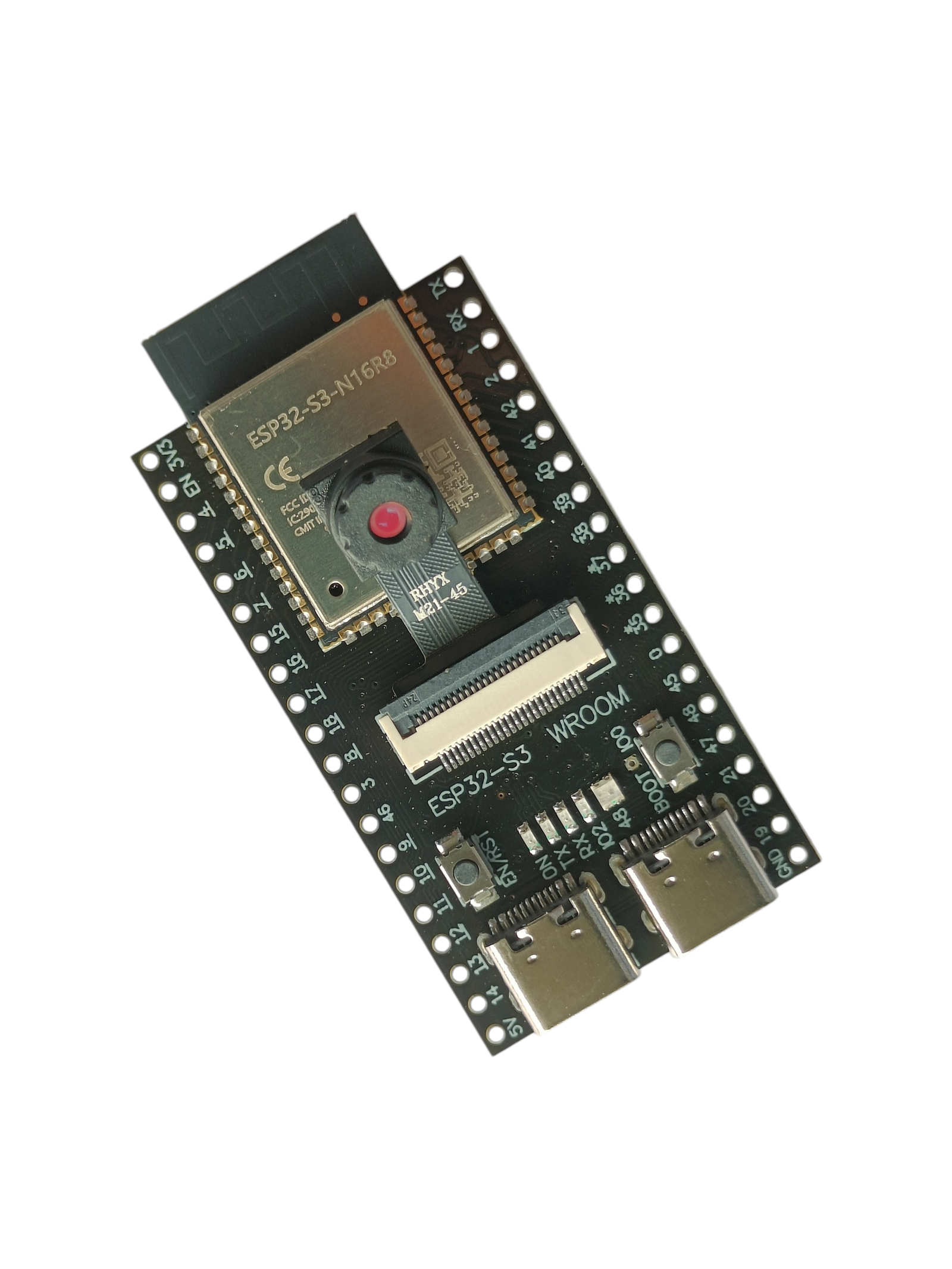
An integrated camera interface allows the board to connect with compatible camera modules such as the RHYX-M21-45, OV3660, and OV2640, making it suitable for AI vision and image-capture projects. The board also provides 45 GPIO pins, allowing connection to sensors, displays, motors, actuators, and other external peripherals.
With dual USB Type-C ports, two 20-pin male header strips, and compatibility with Arduino IDE, ESP-IDF, and MicroPython, the board provides flexible development and convenient prototyping for beginners, hobbyists, engineers, and professional developers.
Features
- ESP32-S3 dual-core 32-bit microcontroller
- Dual-core Xtensa LX7 processor
- CPU frequency up to 240MHz
- 8MB Flash memory
- 8MB PSRAM
- Built-in Wi-Fi 802.11 b/g/n
- Built-in Bluetooth 5.0 BLE
- Camera interface for image capture and processing
- Supports AI and machine-learning applications
- Supports edge computing applications
- Compatible with Arduino IDE
- Compatible with ESP-IDF
- Supports MicroPython
- 45 GPIO pins
- Dual USB Type-C ports
- Two 20-pin male header strips
- 3.3V operating logic
- 5V external power through USB Type-C
- Compact development board design
- Suitable for embedded and IoT applications
- Ideal for robotics and automation projects
- Includes RHYX-M21-45 camera
Specifications
| Parameter | Specification |
|---|---|
| Product Type | ESP32-S3 Development Board |
| Microcontroller | ESP32-S3 |
| CPU | Dual-Core Xtensa LX7 |
| Maximum Clock Speed | Up to 240MHz |
| Flash Memory | 8MB |
| PSRAM | 8MB |
| Wi-Fi | 802.11 b/g/n |
| Bluetooth | Bluetooth 5.0 BLE |
| Camera Support | RHYX-M21-45, OV3660, OV2640 or compatible |
| GPIO | 45 Pins |
| Operating Voltage | 3.3V |
| External Power | 5V via USB Type-C |
| USB Ports | 2 × USB Type-C |
| Programming | Arduino IDE, ESP-IDF, MicroPython |
| Board Dimensions | Approximately 51mm × 29mm |
| Included Headers | 2 × 20-Pin Male Header Strips |
| Included Camera | RHYX-M21-45 |
Design and Construction
The ESP32-S3-N16R8 development board features a compact design intended for embedded development, AI applications, and rapid prototyping. The board combines the ESP32-S3 microcontroller, memory, wireless connectivity, USB interfaces, GPIO connections, and camera support into a single development platform.
The 8MB Flash and 8MB PSRAM provide additional memory resources for applications that require larger programs, image buffers, AI models, and data processing. This makes the board particularly suitable for computer-vision and edge-AI applications.
The board provides 45 GPIO pins, allowing developers to connect external sensors, displays, motors, relays, communication modules, and other peripherals. The included 20-pin male header strips can be soldered to the board for convenient prototyping and jumper-wire connections.
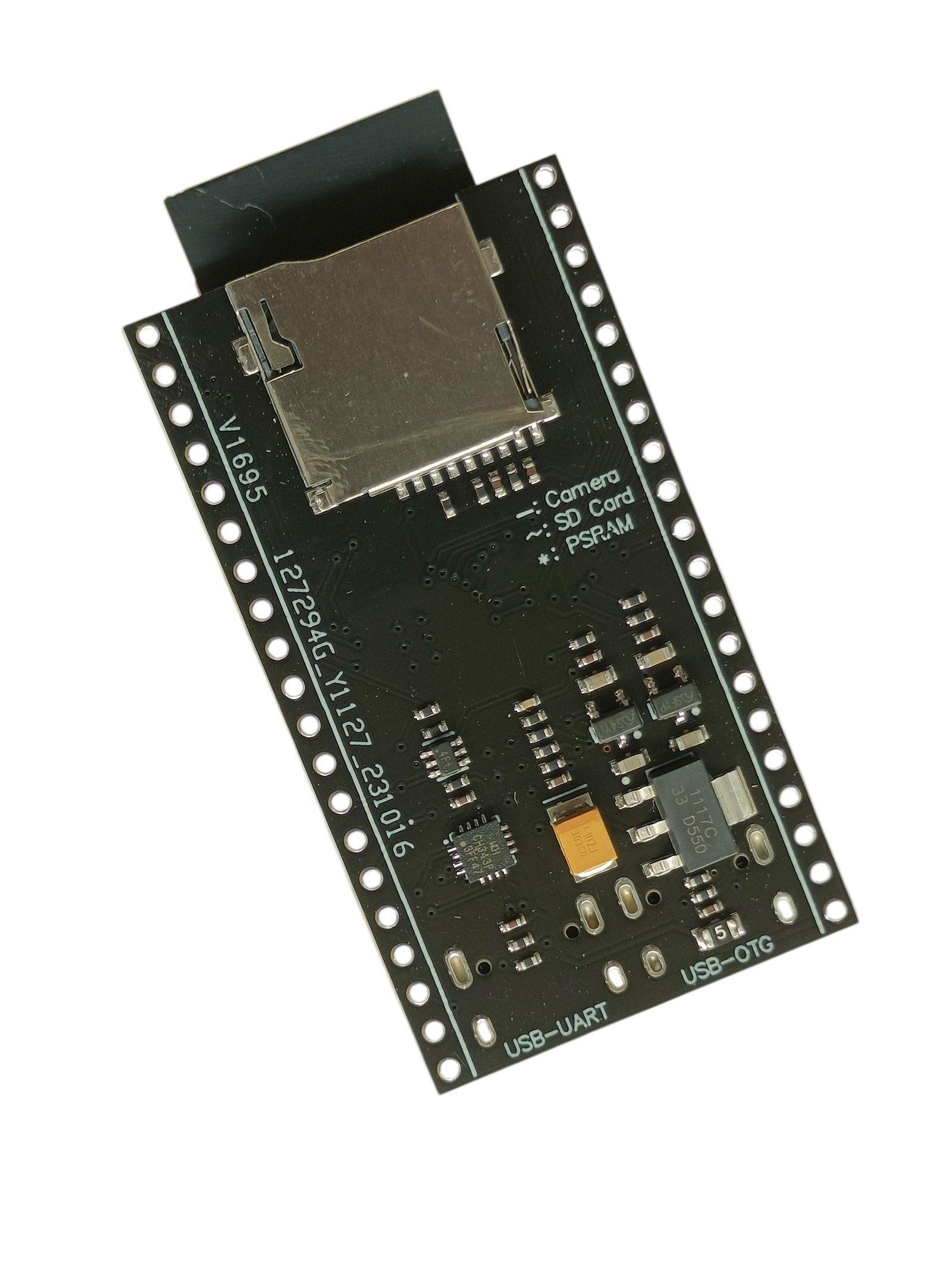
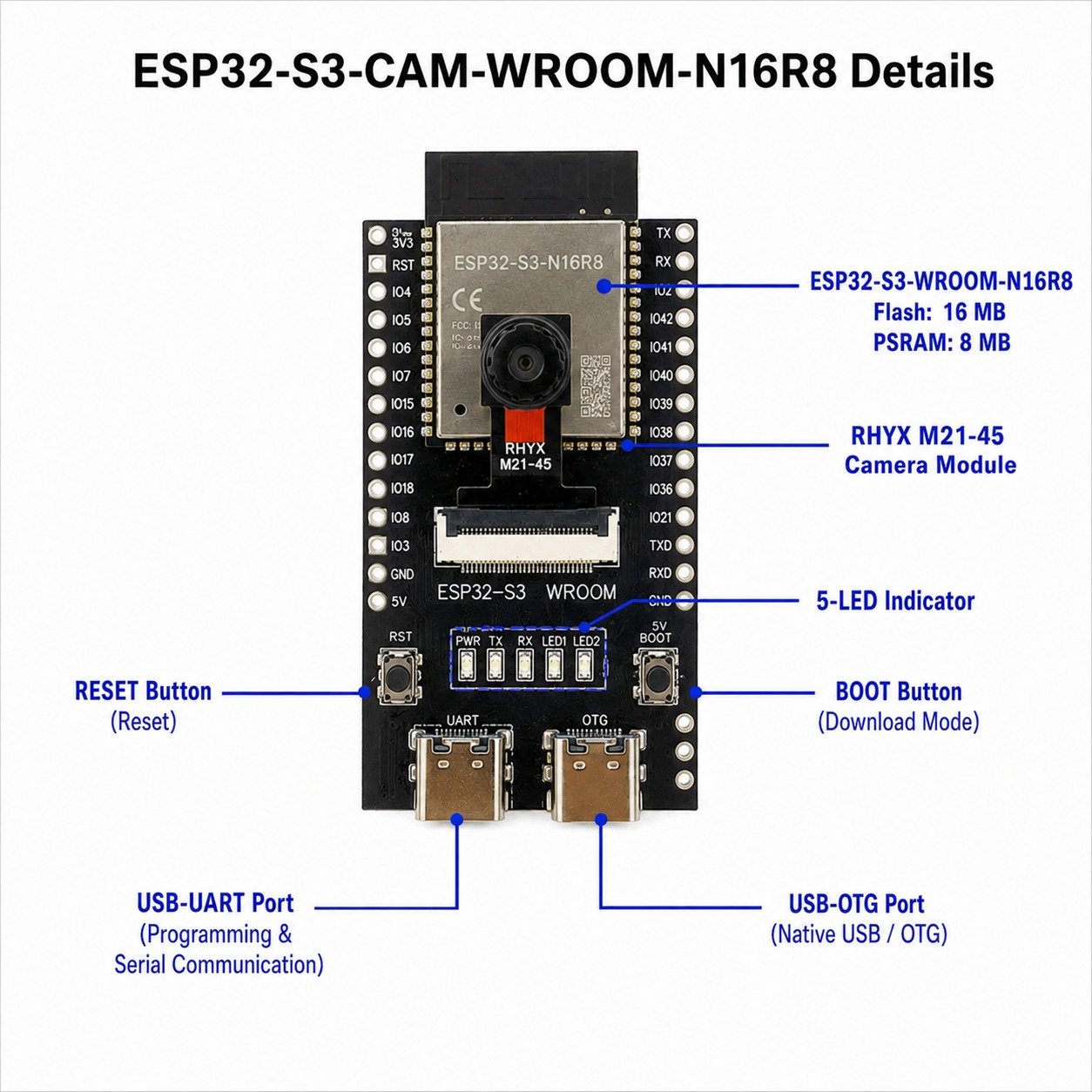
Two USB Type-C ports provide convenient options for powering, programming, and developing applications depending on the board configuration.
Camera Interface
The board includes a camera interface for image capture and processing applications. It is supplied with an RHYX-M21-45 camera and can support compatible camera modules such as OV3660 and OV2640, subject to interface and software compatibility.
The camera interface enables the board to capture images for applications such as:
- Face detection
- Face recognition
- Object detection
- Object tracking
- Image classification
- Visual monitoring
- AI vision
- Smart surveillance
- Computer vision experiments
The camera makes the board particularly useful for developing compact AI-enabled vision systems.
Working Principle
The ESP32-S3 acts as the main processing controller for the development board. It executes firmware stored in the Flash memory and uses the available PSRAM for temporary data, image buffers, and memory-intensive applications.
For wireless applications, the integrated Wi-Fi and Bluetooth 5.0 BLE allow the board to communicate with networks, smartphones, computers, cloud services, sensors, and other compatible devices.
When a camera is connected, image data can be captured and processed by the ESP32-S3. The processor can run suitable image-processing, AI, or machine-learning algorithms directly on the board, enabling edge-computing applications without requiring a separate computer for basic processing tasks.
The GPIO pins provide interfaces for external hardware such as sensors, motors, LEDs, displays, and actuators, allowing the board to function as the central controller of a complete embedded system.
Programming and Development
The board supports multiple development environments, providing flexibility for different types of users and projects.
- Arduino IDE – Suitable for beginners, hobbyists, and rapid prototyping.
- ESP-IDF – Suitable for advanced ESP32 development and professional applications.
- MicroPython – Provides Python-based development for supported embedded applications.
This compatibility allows developers to choose the development environment that best matches their project requirements.
Applications
- AI and machine-learning projects
- Computer vision applications
- Face detection and recognition
- Object detection
- Object tracking
- Image processing
- Edge AI applications
- Smart home automation
- IoT devices
- Wireless sensor networks
- Robotics projects
- Autonomous robotic systems
- Smart surveillance systems
- Camera-based monitoring
- Industrial automation
- Embedded vision systems
- DIY electronics projects
- ESP32 development
- Bluetooth IoT applications
- Wi-Fi-enabled devices
- Smart control systems
- Educational AI projects
- Prototype development
Package Includes
- 1 × ESP32-S3-N16R8 Development Board
- 1 × RHYX-M21-45 Camera
- 2 × 20-Pin Male Header Strips
Product Disclaimer
Product images are for illustrative and representational purposes only. The actual product may vary slightly in colour, PCB markings, component placement, connector configuration, dimensions, or overall appearance depending on the manufacturing batch.
USB cables, sensors, displays, motors, batteries, and other components shown in product images are not included unless specifically mentioned in the package contents.
Camera compatibility may depend on the specific camera module, hardware interface, firmware, drivers, and software configuration. Always verify the required voltage, pin configuration, and supported camera interface before connecting external hardware.
Frequently Asked Questions (FAQs)
1. What is the ESP32-S3-N16R8 Development Board?
It is a high-performance ESP32-S3 development board designed for AI, computer vision, IoT, robotics, automation, and embedded applications.
2. What processor does the board use?
The board uses the ESP32-S3 dual-core Xtensa LX7 processor with a clock speed of up to 240MHz.
3. How much Flash memory does the board have?
The board has 8MB Flash memory.
4. How much PSRAM is available?
It includes 8MB PSRAM, which is useful for image processing, AI applications, and memory-intensive programs.
5. Does the board support Wi-Fi?
Yes. It supports Wi-Fi 802.11 b/g/n connectivity.
6. Does it support Bluetooth?
Yes. The board supports Bluetooth 5.0 BLE.
7. Does the board support camera modules?
Yes. It includes a camera interface and comes with an RHYX-M21-45 camera. It can also support compatible camera modules such as OV2640 and OV3660, depending on hardware and software compatibility.
8. Is the camera included in the package?
Yes. The package includes 1 × RHYX-M21-45 Camera.
9. What can the camera interface be used for?
It can be used for face detection, face recognition, object detection, object tracking, image processing, AI vision, and visual monitoring projects.
10. How many GPIO pins are available?
The board provides up to 45 GPIO pins, allowing connection to sensors, displays, motors, modules, and other peripherals.
11. What USB ports does the board have?
The board features two USB Type-C ports for programming, communication, and power depending on the board configuration.
12. What is the operating voltage?
The ESP32-S3 operates at 3.3V logic, while external power can be supplied through USB Type-C at 5V.
13. Which programming environments are supported?
The board supports Arduino IDE, ESP-IDF, and MicroPython.
14. Can I program this board using Arduino IDE?
Yes. It is compatible with the Arduino IDE and can be used for ESP32-S3 development.
15. Can I use MicroPython with this board?
Yes. The board supports MicroPython for compatible ESP32-S3 applications.
16. Is it suitable for AI and machine-learning projects?
Yes. Its ESP32-S3 processor, PSRAM, camera interface, and AI/ML capabilities make it suitable for edge-AI and machine-learning applications.
17. Can it be used for face recognition?
Yes. With suitable software and camera support, the board can be used to develop face detection and face recognition applications.
18. Can it be used for object detection?
Yes. The board can be used for compatible object detection and image-classification applications.
19. Is this board suitable for robotics?
Yes. It is suitable for robotics, autonomous vehicles, camera-based robots, smart robots, and IoT-enabled robotic systems.
20. Can I connect sensors and external modules?
Yes. The available GPIO pins can be used to connect compatible sensors, displays, motors, actuators, and communication modules.
21. What is the board size?
The board dimensions are approximately 51mm × 29mm.
22. Are male header pins included?
Yes. The package includes 2 × 20-pin male header strips for soldering and prototyping.
23. Is a USB cable included?
No. A USB Type-C cable is not included unless specifically mentioned in the package contents.
24. Can this board be used for IoT projects?
Yes. Wi-Fi and Bluetooth connectivity make it suitable for smart-home devices, wireless sensors, cloud-connected systems, and IoT applications.
25. Can it be used for smart-home automation?
Yes. It can control compatible sensors, relays, actuators, and other devices while communicating over Wi-Fi or Bluetooth.
26. What is the purpose of the 8MB PSRAM?
PSRAM provides additional working memory for applications such as image processing, camera buffers, AI models, and other memory-intensive tasks.
27. Can the board perform image processing locally?
Yes. The ESP32-S3 can perform suitable image-processing and edge-AI tasks locally without necessarily requiring a separate computer.
28. What is included in the package?
The package includes 1 × ESP32-S3-N16R8 Development Board, 1 × RHYX-M21-45 Camera, and 2 × 20-pin Male Header Strips.
29. Is the actual product exactly the same as shown in the images?
No. Product images are for representation only, and the actual product may vary slightly in colour, PCB markings, component placement, connector configuration, or overall appearance depending on the manufacturing batch.
30. What should I check before connecting external hardware?
Verify the 3.3V logic requirements, GPIO pin configuration, camera compatibility, power requirements, and wiring of the external device before making connections.
Only logged in customers who have purchased this product may leave a review.



Reviews
There are no reviews yet