
Hall Effect Sensor Module
₹53.10 incl. GST (₹45.00 + GST)
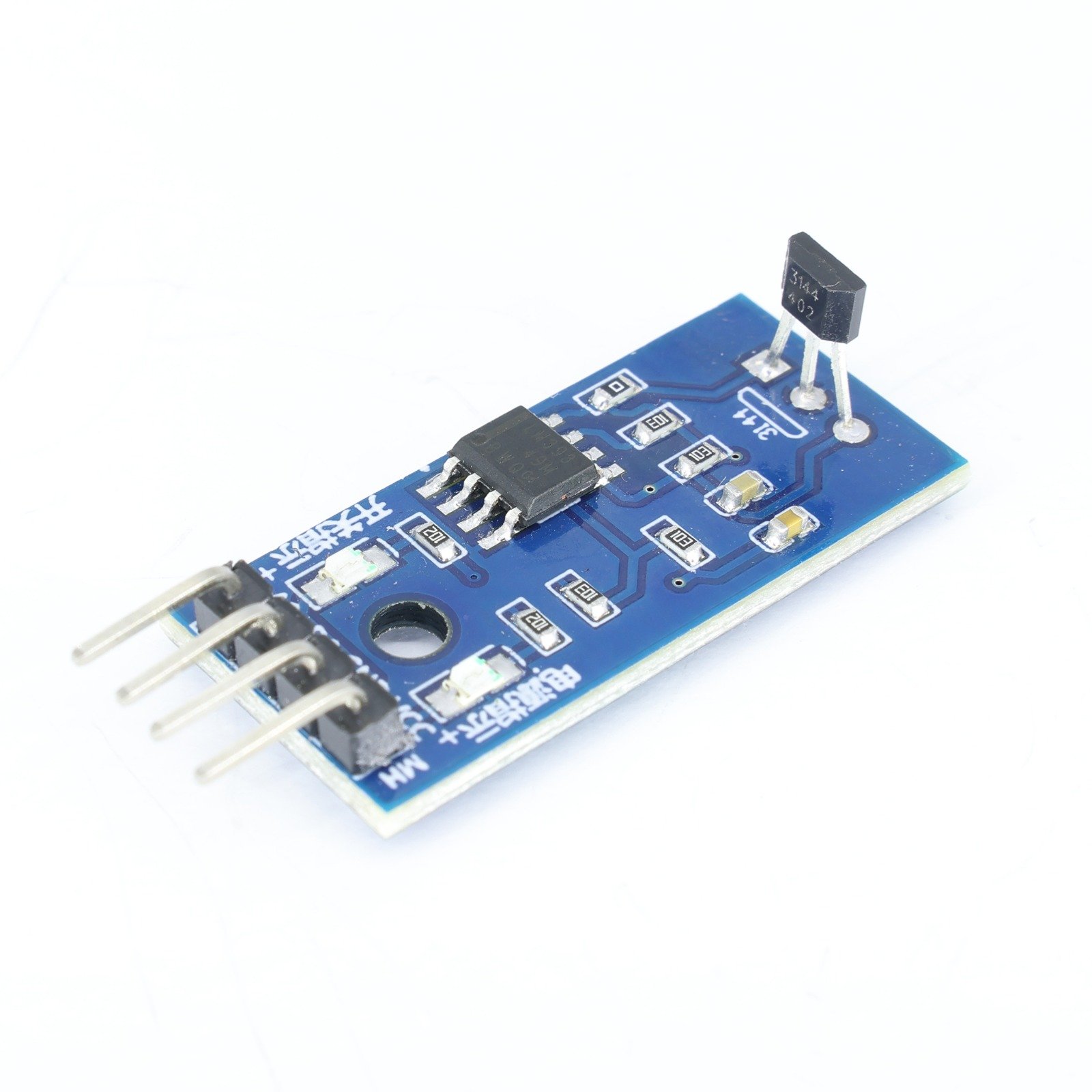
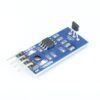
The Hall Effect Counter Sensor Module is a compact magnetic detection module based on the 3144E Hall Effect sensor and LM393 comparator. It detects magnets and magnetic-field changes and provides a clean digital HIGH/LOW output, making it ideal for motor speed measurement, wheel rotation, object counting, and position detection. It operates from 3.3V–5V DC, includes power and signal LEDs, and features M3 mounting holes for easy installation. Suitable for Arduino, robotics, automation, and DIY electronics projects.
Hall Effect Counter Sensor Module
The Hall Effect Counter Sensor Module is a compact and reliable magnetic sensing module designed for detecting magnetic fields, magnet movement, rotation, and counting applications. Based on the 3144E switch-type Hall Effect sensor, the module can detect changes in a magnetic field and convert them into a clean digital HIGH/LOW output signal.
The module uses a wide-voltage LM393 comparator to process the signal from the Hall sensor and provide a stable digital output. When a suitable magnetic field is detected, the output switches to a LOW level, and the onboard signal LED illuminates. When no magnetic field is detected, the output remains HIGH and the signal LED turns off.
Hall-effect sensing provides a non-contact detection method with no mechanical parts involved in the sensing operation. This gives the module advantages such as compact size, low power consumption, long service life, good vibration resistance, and reliable operation in environments where dust, oil, moisture, or corrosion may affect mechanical switches.
The module includes M3 mounting holes for convenient installation and positioning. Its clean digital output and driving capability of more than 15mA make it suitable for connecting to microcontrollers, counters, control circuits, and other digital systems.
Features
- 3144E switch-type Hall Effect sensor
- Digital magnetic-field detection
- Detects magnet presence and movement
- Suitable for counting applications
- Wide operating voltage range
- 3.3V–5V DC operation
- Integrated LM393 voltage comparator
- Clean and stable digital output
- HIGH/LOW switching signal
- Signal LED indicates magnetic detection
- Power LED indicates module power
- Driving capability greater than 15mA
- M3 mounting holes for easy installation
- Compact and lightweight design
- Non-contact sensing operation
- Good vibration resistance
- Long service life
- Low power consumption
- Suitable for robotics and automation
- Ideal for motor speed and position measurement
Specifications
| Parameter | Specification |
|---|---|
| Product Type | Hall Effect Counter Sensor Module |
| Core Sensor | 3144E Switch-Type Hall Effect Sensor |
| Comparator | LM393 |
| Operating Voltage | 3.3V – 5V DC |
| Output Type | Digital Output (DO) |
| Magnetic Field Detected | LOW (0) |
| No Magnetic Field | HIGH (1) |
| Signal Indicator | Signal LED |
| Power Indicator | Power LED |
| Output Driving Capability | >15mA |
| Mounting | M3 Mounting Holes |
| Sensing Method | Non-Contact Magnetic Detection |
| Applications | Speed Measurement, Position Detection, Counting |
Design and Construction
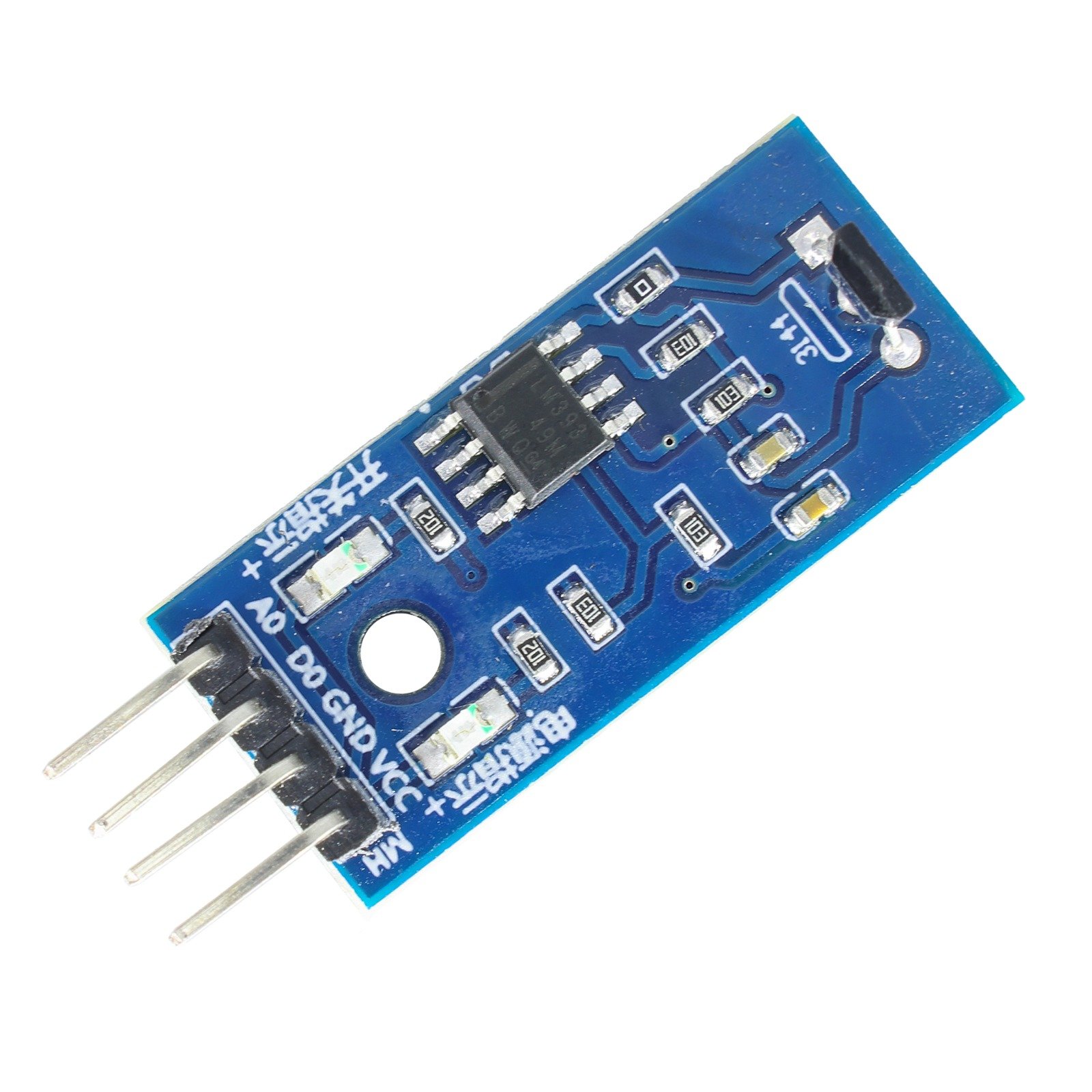
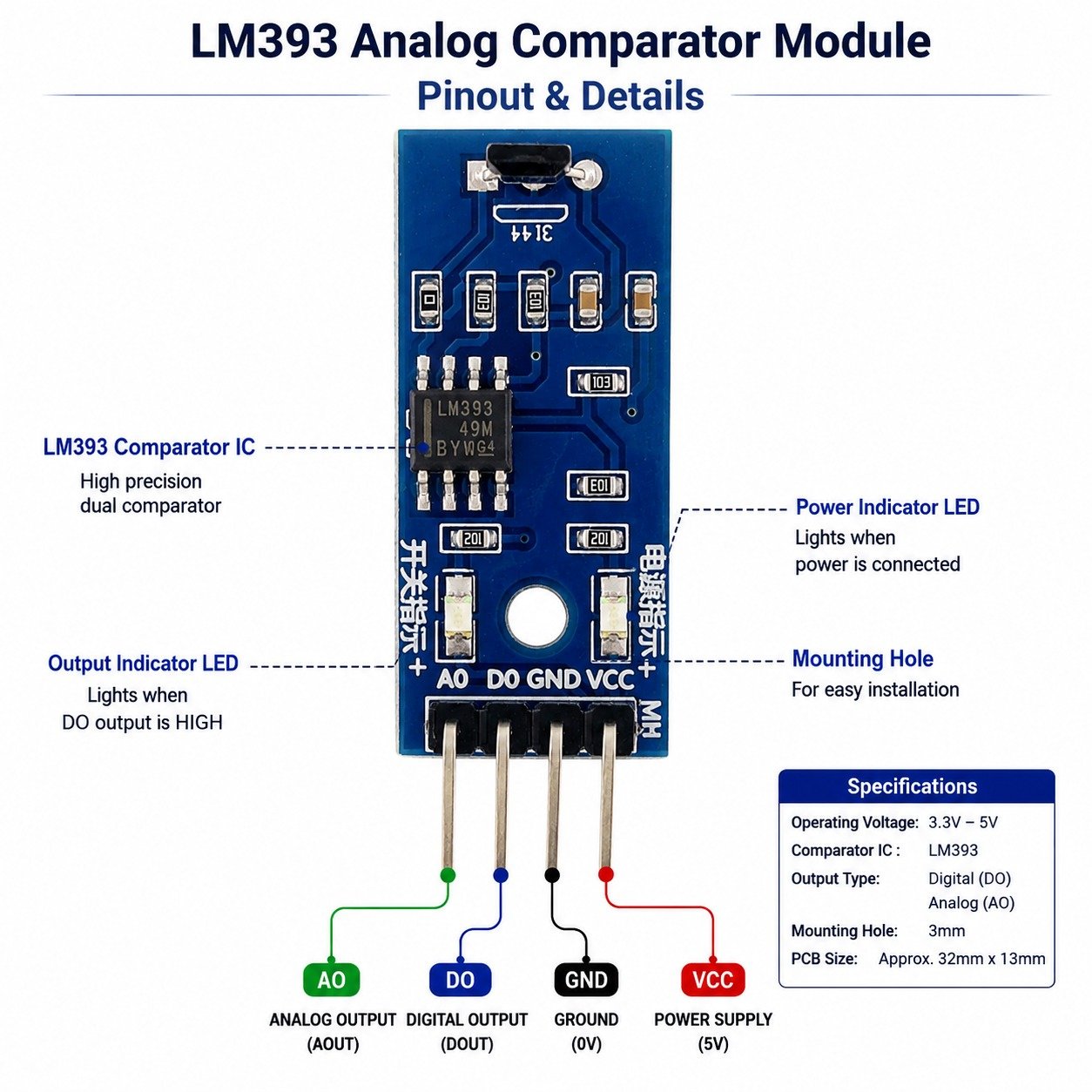
The Hall Effect Counter Sensor Module combines a 3144E Hall-effect sensor with an LM393 comparator circuit on a compact PCB. The Hall sensor detects changes in the surrounding magnetic field, while the comparator converts the sensor signal into a clean digital output.
The module is equipped with M3 mounting holes, allowing it to be securely fixed to a motor, robot chassis, mechanical structure, or other mounting surface. The mounting holes also make it easier to adjust the sensor’s position relative to a rotating magnet or magnetic target.
Two onboard LEDs provide visual feedback:
- Power LED – Indicates that the module is receiving power.
- Signal LED – Illuminates when a suitable magnetic field is detected.
The non-contact sensing design eliminates mechanical switching components, providing a durable solution for repeated counting and motion-detection applications.
Working Principle
The module operates using the Hall effect. When a magnet or magnetic object approaches the 3144E Hall sensor, the sensor detects the magnetic field and changes its electrical output.
The signal is then processed by the LM393 comparator, which converts it into a digital switching signal.
- Magnetic field detected: Digital output = LOW (0), Signal LED = ON
- No magnetic field detected: Digital output = HIGH (1), Signal LED = OFF
When a magnet is attached to a rotating wheel or motor shaft, every time the magnet passes the Hall sensor, the module produces a digital pulse. A microcontroller can count these pulses to calculate rotational speed, RPM, position, or the number of rotations.
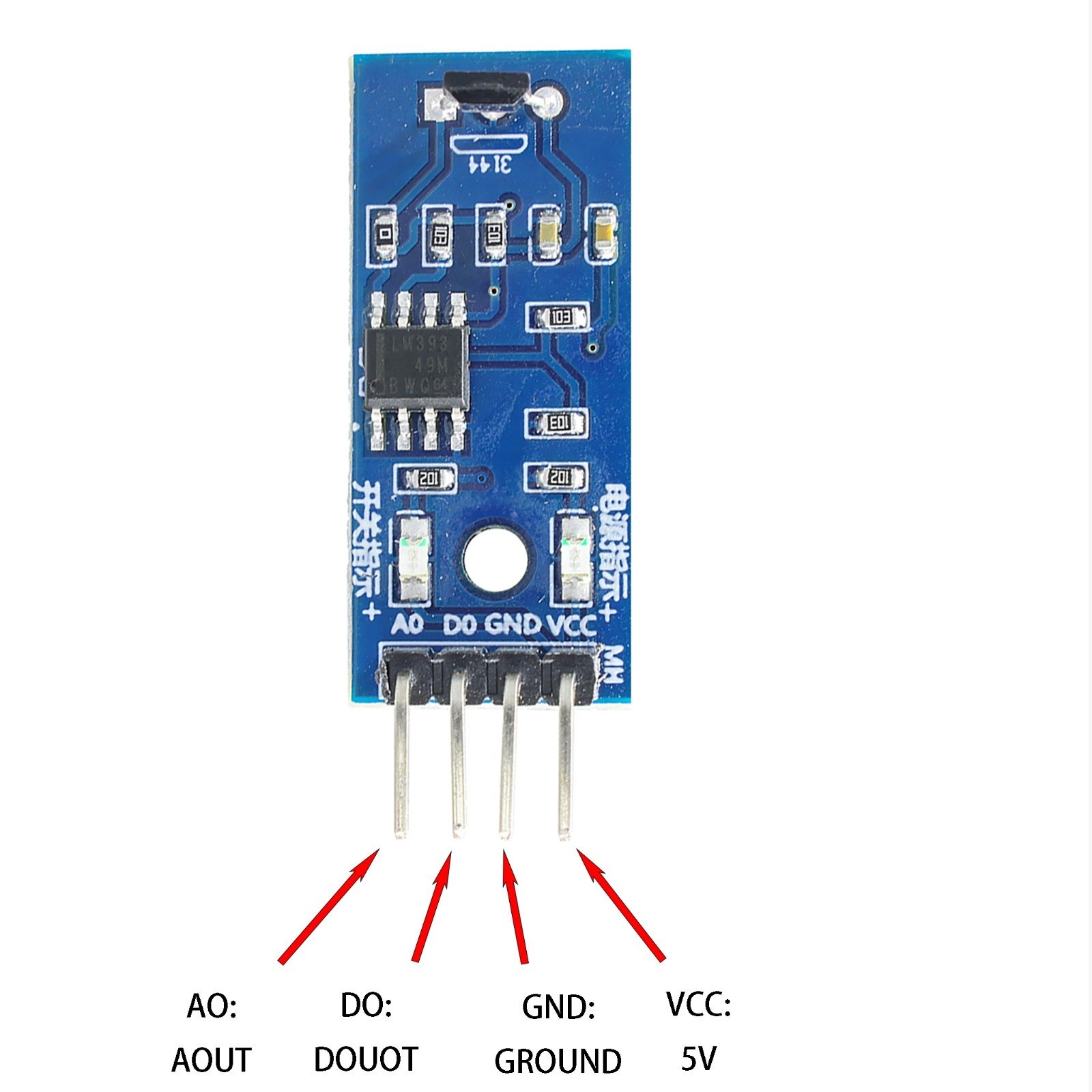
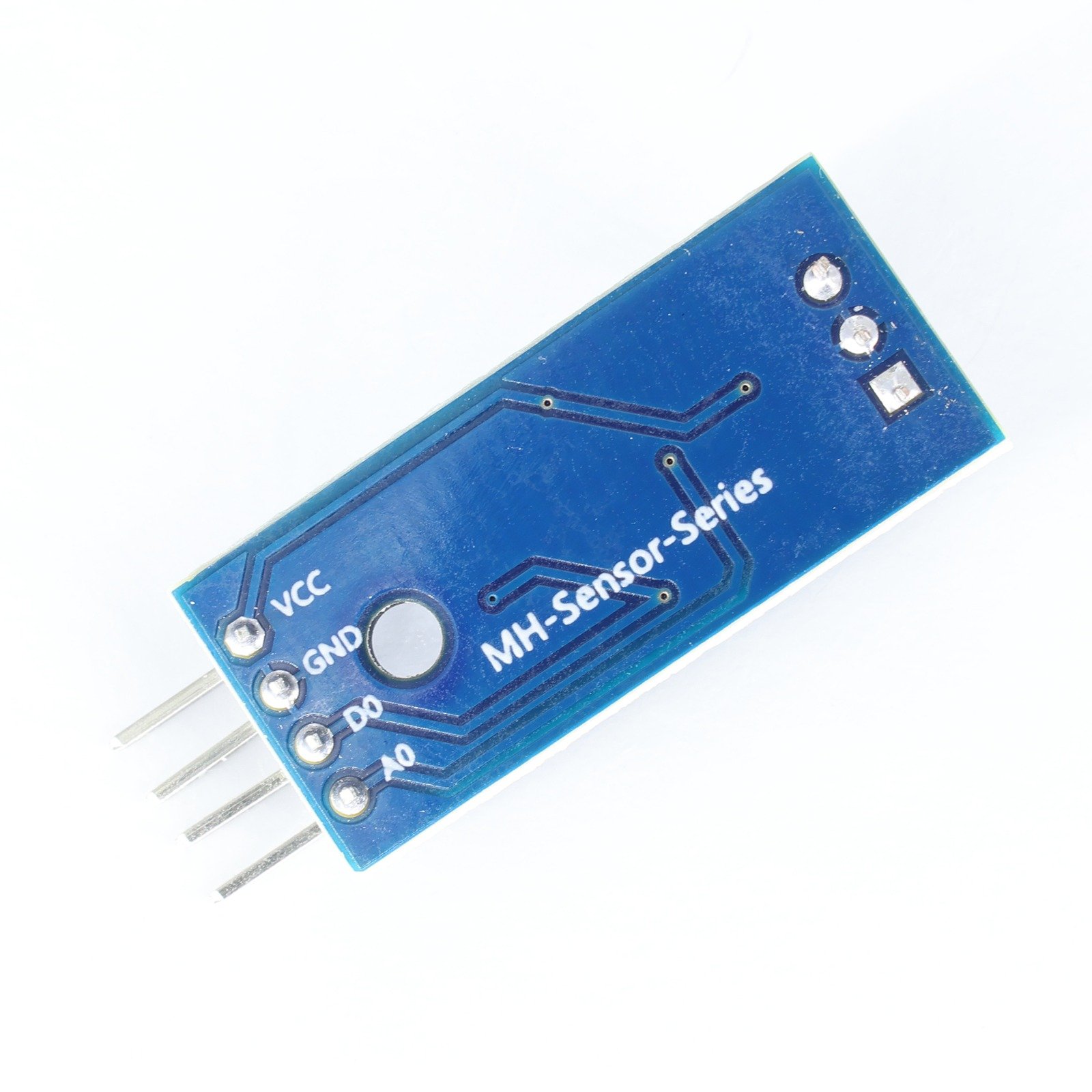
Pin Description
The module typically provides the following connections:
| Pin | Description |
|---|---|
| VCC | 3.3V–5V DC power input |
| GND | Power supply ground |
| DO | Digital Hall sensor output |
The exact pin arrangement should always be verified from the labels printed on the supplied module before connection.
Counting and Speed Measurement
The Hall Effect Counter Sensor is particularly useful for counting rotating objects and measuring motor or wheel speed.
For example, a small magnet can be attached to a motor shaft. Each time the shaft rotates and the magnet passes the Hall sensor, the digital output changes state and produces a pulse. A microcontroller can count these pulses over a specific period to calculate the rotational speed.
This principle can be used for:
- Motor RPM measurement
- Wheel speed measurement
- Rotation counting
- Shaft position detection
- Conveyor speed monitoring
- Robotic wheel monitoring
Applications
- Motor speed measurement
- Motor RPM measurement
- Wheel speed detection
- Shaft rotation counting
- Object counting
- Position detection
- Magnetic position sensing
- Rotary encoder applications
- Conveyor monitoring
- Robotics projects
- Robot wheel monitoring
- Automation systems
- Motor control systems
- Tachometer projects
- Pulse counting
- Mechanical movement detection
- DIY electronics projects
- Arduino projects
- Microcontroller-based counters
- Educational electronics
- Embedded control systems
Advantages of Hall Effect Sensing
Hall-effect sensing provides several benefits compared with traditional mechanical switches:
- Non-contact operation
- No mechanical contacts to wear out
- Long operating life
- Compact construction
- Low power consumption
- Good resistance to vibration
- Reliable magnetic detection
- Less affected by dust and moisture
- Suitable for high-frequency switching
- Easy integration with digital control systems
Package Includes
- 1 × Hall Effect Counter Sensor Module
Product Disclaimer
Product images are for illustrative and representational purposes only. The actual product may vary slightly in colour, PCB layout, component placement, dimensions, mounting-hole position, markings, or overall appearance depending on the manufacturing batch.
Magnets, Arduino boards, microcontrollers, motors, wheels, jumper wires, power supplies, and other components shown in product images are not included unless specifically mentioned in the package contents.
Always verify the module’s VCC, GND, and DO pin labels before connecting it to a power supply or microcontroller. Use a suitable supply voltage within the specified 3.3V–5V DC operating range.
Only logged in customers who have purchased this product may leave a review.



Reviews
There are no reviews yet