
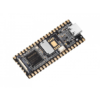
LuckFox Pico RV1103 Linux Micro Development Board Without Pin Header
₹2,053.20 incl. GST (₹1,740.00 + GST)
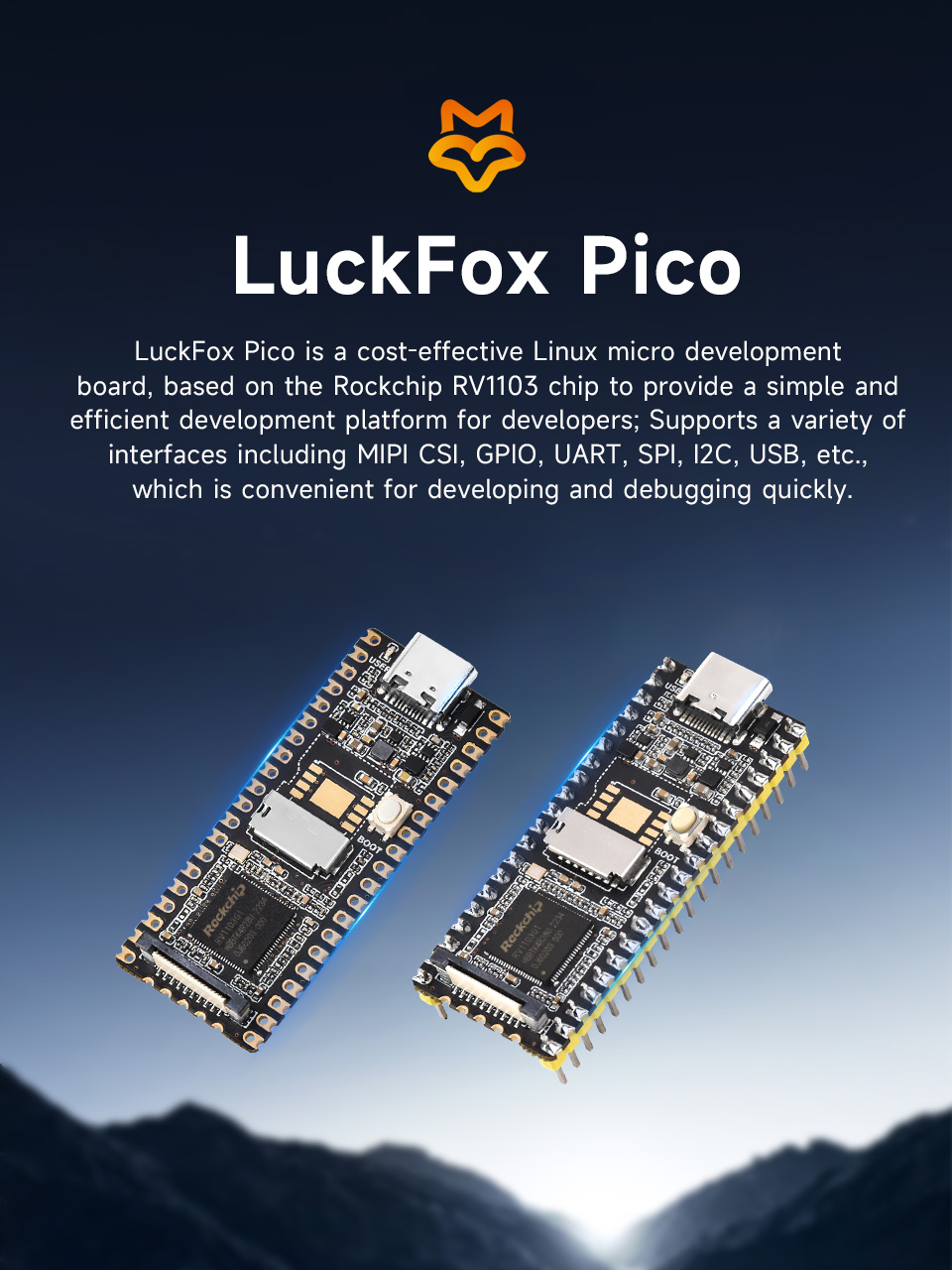
The LuckFox Pico RV1103 Linux Micro Development Board is a compact Linux development platform based on the Rockchip RV1103 SoC, featuring an ARM Cortex-A7 processor, RISC-V MCU, NPU, and ISP. It provides 0.5 TOPS NPU performance, 64MB DDR2 memory, 24 GPIO pins, USB 2.0, 10/100M Ethernet, and a 2-lane MIPI CSI camera interface supporting up to 4MP @ 30fps. With its AI acceleration and image-processing capabilities, it is ideal for computer vision, robotics, UAVs, smart monitoring, IoT, industrial automation, and embedded AI projects. This is the without pin header version; TF card and other accessories are not included.
Product Description
The LuckFox Pico RV1103 Linux Micro Development Board is a compact and cost-effective Linux development platform based on the Rockchip RV1103 vision processor SoC. It is designed for developers, makers, robotics enthusiasts, and embedded system engineers working on AI, computer vision, IoT, automation, robotics, and smart-device applications.
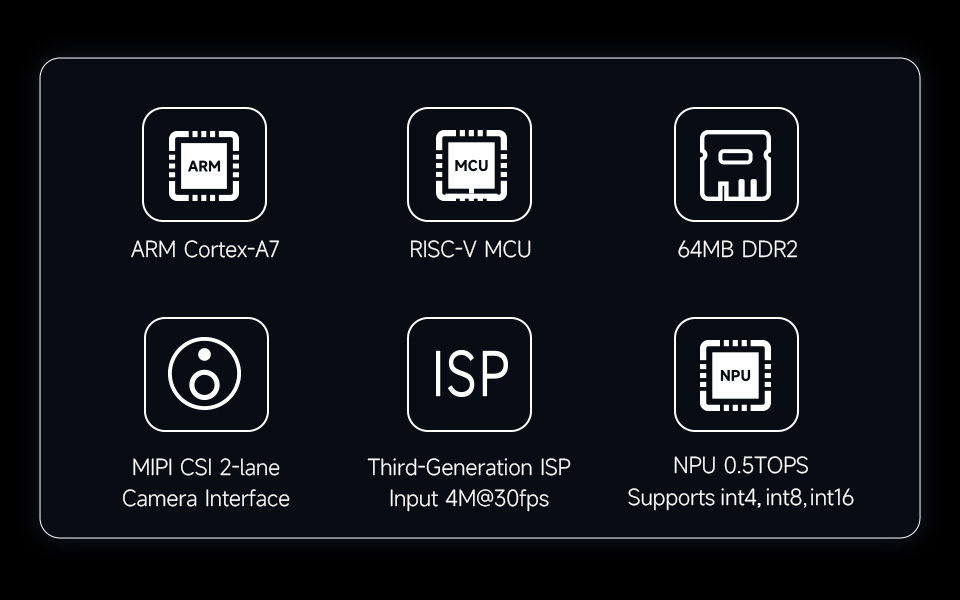
The board integrates a single-core ARM Cortex-A7 32-bit processor running at up to 1.2GHz, along with a built-in RISC-V MCU, NPU, and ISP for efficient processing of AI and image-related workloads. Its integrated NPU supports INT4, INT8, and INT16 operations, with up to 0.5 TOPS INT8 computing performance and higher performance with INT4 workloads.
The RV1103 also includes a dedicated ISP supporting camera input up to 4MP at 30fps, making the board suitable for embedded computer vision and intelligent camera applications. The integrated image-processing features support functions such as HDR, WDR, noise reduction, image enhancement, and correction.
The LuckFox Pico includes 64MB DDR2 memory, USB 2.0, MIPI CSI camera connectivity, 24 GPIO pins, TF card storage support, and Ethernet connectivity. The board is supplied in the without pin header version, allowing users to choose their preferred connection method for custom embedded projects.
Features
- Compact Linux micro development board
- Based on Rockchip RV1103 vision processor SoC
- Single-core ARM Cortex-A7 32-bit CPU
- Processor frequency up to 1.2GHz
- Integrated RISC-V MCU
- Built-in AI NPU accelerator
- Supports INT4, INT8, and INT16 operations
- Up to 0.5 TOPS INT8 NPU performance
- Up to 1.0 TOPS with INT4 workloads
- Integrated ISP3.2 image signal processor
- Supports up to 4MP @ 30fps camera input
- MIPI CSI 2-lane camera interface
- 64MB DDR2 memory
- USB 2.0 Host/Device support
- 24 GPIO pins
- 10/100M Ethernet controller with embedded PHY
- TF card slot for storage
- Compact and lightweight development platform
- Suitable for Linux-based embedded development
- Designed for AI and computer vision applications
- Without pin header version for custom integration
Specifications
| Parameter | Specification |
|---|---|
| Product Type | Linux Micro Development Board |
| Model | LuckFox Pico RV1103 |
| Main Processor | Rockchip RV1103 |
| CPU | ARM Cortex-A7 32-bit |
| CPU Frequency | Up to 1.2GHz |
| MCU | RISC-V |
| NPU | 0.5 TOPS |
| NPU Precision | INT4 / INT8 / INT16 |
| INT4 Performance | Up to 1.0 TOPS |
| ISP | ISP3.2 |
| Camera Input | Up to 4MP @ 30fps |
| Camera Interface | MIPI CSI 2-Lane |
| Memory | 64MB DDR2 |
| USB | USB 2.0 Host/Device |
| GPIO | 24 GPIO Pins |
| Ethernet | 10/100M |
| Storage | TF Card |
| TF Card | Not Included |
| Pin Header | Not Included / Without Pin Header |
| Application | Linux, AI, Vision, Robotics, IoT |
Design and Construction
The LuckFox Pico RV1103 is designed as a small Linux development platform that combines multiple processing functions into a single compact board. The integration of the CPU, RISC-V MCU, NPU, and ISP provides a practical platform for embedded AI and computer-vision applications.
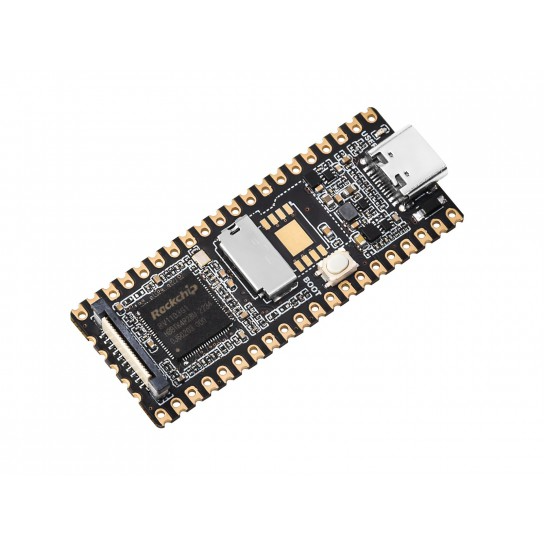
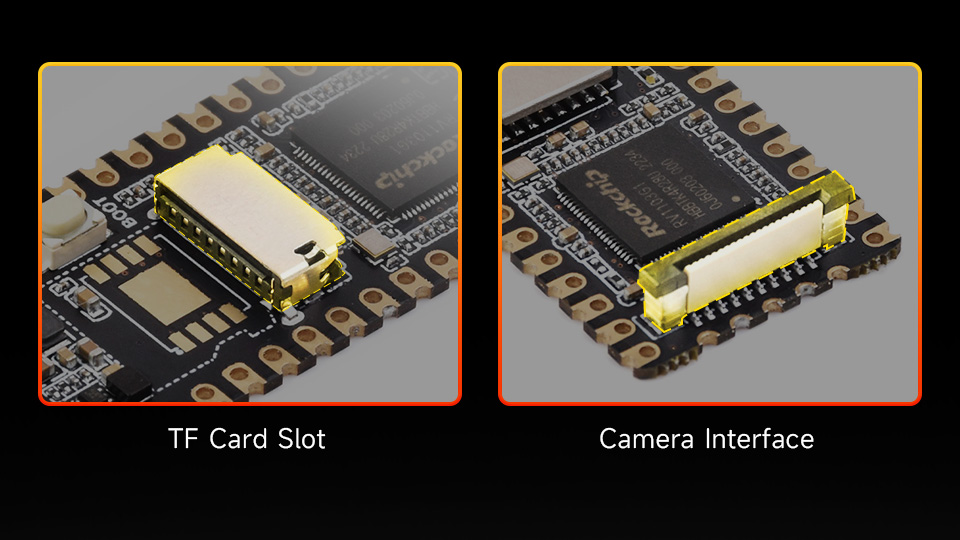
The board provides a USB Type-C connector for connectivity and power-related development, along with a TF card slot for system and application storage. The MIPI CSI 2-lane interface allows compatible cameras to be connected for image and video processing applications.
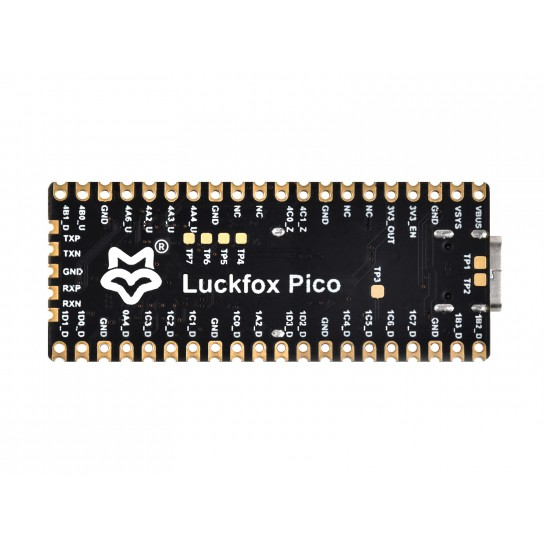
The board also provides access to 24 GPIO pins, making it possible to connect sensors, actuators, displays, communication modules, and other peripherals. Ethernet interface pads provide wired network connectivity for suitable applications.
This model is supplied without pin headers, giving developers flexibility when integrating the board directly into custom PCBs, robotic platforms, or other embedded systems.
Integrated CPU, NPU, RISC-V MCU and ISP
The RV1103 integrates several processing units designed for different embedded workloads.
The ARM Cortex-A7 processor provides the main processing environment for Linux applications and general-purpose computing. The integrated RISC-V MCU can support low-power operation and fast startup functions.
For AI workloads, the built-in NPU supports INT4, INT8, and INT16 mixed-precision operations. It provides up to 0.5 TOPS INT8 computing performance, with up to 1.0 TOPS using INT4 workloads according to the supplied specifications.
The integrated ISP3.2 is designed for camera and image-processing applications and supports up to 4MP at 30fps input. It provides image-processing functions such as HDR, WDR, noise reduction, image enhancement, and image correction.
Camera and Vision Capabilities
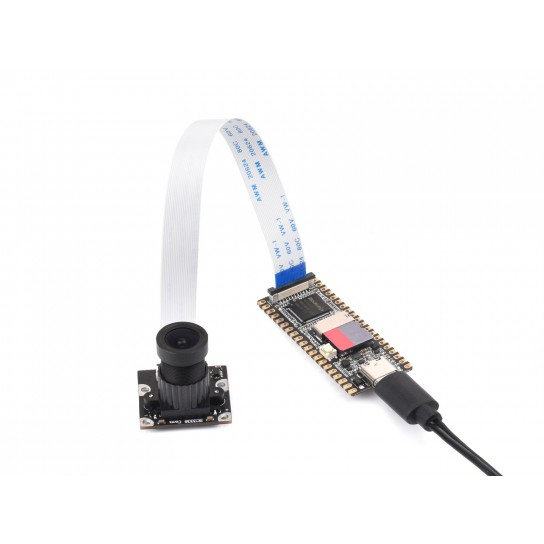
The LuckFox Pico provides a 2-lane MIPI CSI camera interface for connecting compatible camera modules. Combined with the RV1103’s ISP and NPU, the board can be used to develop embedded computer-vision applications.
The integrated processing capabilities make it suitable for projects involving image capture, AI inference, object recognition, face recognition, intelligent monitoring, and other vision-based applications.
The board also supports intelligent encoding features designed to provide efficient video processing and storage for compatible camera applications.
Storage and Connectivity
The board includes an integrated TF card slot that can be used for system storage, applications, models, and other required data. The TF card itself is not included with the product.
For peripheral connectivity, the board provides USB 2.0 Host/Device support and 24 GPIO pins. Its 10/100M Ethernet capability enables wired networking for suitable Linux and IoT applications.
What’s On Board
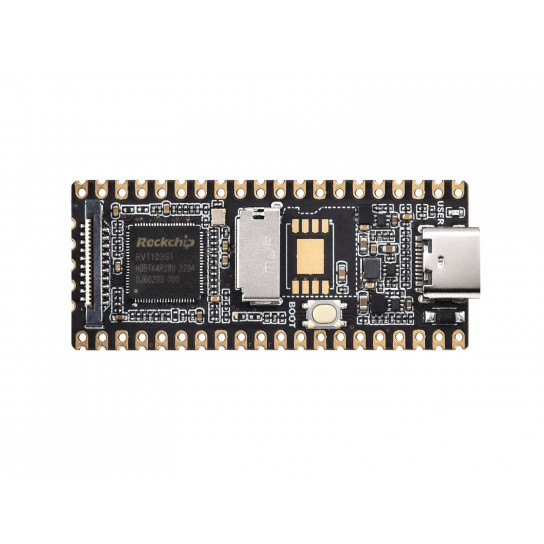
- USB Type-C Connector – Used for board connectivity and development.
- ACT LED – Indicates board activity.
- BOOT Button – Used to enter download mode when pressed during power-up.
- TF Card Slot – Provides external storage support.
- RV1103 SoC – Main vision processor with integrated ARM Cortex-A7 core.
- CSI Camera Interface – 2-lane MIPI CSI interface for compatible cameras.
- GPIO Interface – Provides access to 24 GPIO pins.
- USB Test Pads – Test and development access.
- BOOT Test Pad – Provides boot-related test access.
- Microphone Test Pads – Provides access for compatible audio development.
- Ethernet Interface Pads – Provides access to the integrated Ethernet functionality.
Working Principle
The LuckFox Pico operates as a Linux-based embedded computing platform using the RV1103 SoC as its main processing unit. The ARM Cortex-A7 processor runs the operating system and application software, while the integrated RISC-V MCU can support low-power and fast-startup functions.
For AI and computer-vision applications, camera data can be received through the MIPI CSI interface and processed using the integrated ISP. AI inference workloads can then be accelerated using the built-in NPU, reducing the processing burden on the main CPU.
Users can store the Linux system, applications, AI models, and project files on a compatible TF card and communicate with external peripherals through USB, GPIO, camera, and Ethernet interfaces.
Applications
- AI and Computer Vision: Develop embedded AI and image-processing applications.
- Smart Home Devices: Build intelligent connected home automation products.
- Industrial Automation: Suitable for intelligent monitoring and control equipment.
- Robotics: Can be used as a Linux-based processing platform for robots.
- UAV and Drone Projects: Suitable for embedded vision and AI processing.
- Intelligent Monitoring: Supports camera-based monitoring systems.
- Intelligent Transportation: Useful for vision-based transportation applications.
- Smart Medical Equipment: Suitable for compatible embedded medical-device development.
- IoT Devices: Provides Linux, networking, GPIO, and AI capabilities for connected devices.
- Face Recognition: Suitable for developing embedded face-recognition applications.
- Object Recognition: Can be used for AI-based object detection and recognition.
- Smart Camera Systems: Combines camera connectivity, ISP, NPU, and Linux processing.
- Embedded AI Projects: Useful for developing compact AI-enabled devices.
- Educational Projects: Suitable for Linux, AI, robotics, and embedded-system learning.
- Custom Embedded Systems: Can be integrated into custom hardware and prototype designs.
Development and Expansion
The LuckFox Pico provides a combination of Linux processing, AI acceleration, camera connectivity, networking, USB, and GPIO interfaces, making it suitable for developing a wide range of embedded applications.
The 24 GPIO pins can be used to connect external sensors, motors, relays, LEDs, displays, and other peripherals. The camera interface enables vision-based projects, while Ethernet and USB provide additional connectivity options.
The without-pin-header design is particularly useful for developers who want to customize the physical integration of the board into their own hardware or project enclosure.
Package Includes
- 1 × LuckFox Pico RV1103 Linux Micro Development Board – Without Pin Header
Note: TF card, pin headers, camera module, cables, and other external accessories are not included unless specifically mentioned in the package contents.
Product Disclaimer
Product images are provided for reference and may vary slightly from the actual product in terms of colour, dimensions, component placement, connectors, markings, or appearance depending on the manufacturing batch.
This is the without pin header version, so pin headers are not pre-installed. A compatible TF card is also required for storage and is not included.
Please verify the board’s power requirements, GPIO voltage levels, camera compatibility, operating system requirements, and interface specifications before connecting external hardware.
Frequently Asked Questions (FAQs)
1. What is the LuckFox Pico RV1103 development board?
The LuckFox Pico RV1103 is a compact Linux micro development board based on the Rockchip RV1103 vision processor, designed for embedded AI, computer vision, robotics, IoT, and automation projects.
2. Which processor does the LuckFox Pico use?
It uses a single-core ARM Cortex-A7 32-bit processor running at up to 1.2GHz, along with an integrated RISC-V MCU.
3. Does the board have an NPU for AI processing?
Yes. The board has an integrated NPU supporting INT4, INT8, and INT16 operations, with up to 0.5 TOPS INT8 performance.
4. What is the camera interface?
The board provides a 2-lane MIPI CSI camera interface supporting camera input up to 4MP at 30fps.
5. How much memory does the board have?
The LuckFox Pico RV1103 includes 64MB DDR2 memory.
6. Does it support Linux?
Yes. The LuckFox Pico is designed as a Linux-based embedded development platform.
7. How many GPIO pins are available?
The board provides access to 24 GPIO pins for connecting sensors, actuators, displays, and other peripherals.
8. Does the board support USB?
Yes. It provides USB 2.0 Host/Device functionality.
9. Does it have Ethernet connectivity?
Yes. The board supports 10/100M Ethernet through its Ethernet interface.
10. What storage does the board use?
The board includes a TF card slot for system, application, and data storage. The TF card is not included.
11. Is the pin header included?
No. This product is the Without Pin Header version, so pin headers are not pre-installed.
12. Can the LuckFox Pico be used for robotics?
Yes. Its Linux environment, GPIO, AI acceleration, camera interface, and networking capabilities make it suitable for robotics and intelligent robotic systems.
13. Can it be used for UAV and drone projects?
Yes. Its compact design and AI and vision-processing capabilities make it suitable for various UAV and drone applications.
14. Can it be used for computer vision?
Yes. The combination of the MIPI CSI camera interface, ISP, and NPU makes it suitable for embedded computer-vision and AI applications.
15. What are the main applications of this board?
It can be used for AI projects, smart cameras, robotics, UAVs, industrial automation, intelligent monitoring, smart home devices, IoT systems, and embedded computer vision.
16. What is the role of the built-in ISP?
The ISP processes camera data and supports image-processing functions such as HDR, WDR, noise reduction, image enhancement, and correction.
17. What is the purpose of the RISC-V MCU?
The integrated RISC-V MCU can support low-power operation and fast startup functions in suitable applications.
18. Can I connect external sensors and modules?
Yes. The available GPIO pins, USB, camera interface, and Ethernet provide options for connecting compatible external hardware.
19. What is included in the package?
The package includes 1 × LuckFox Pico RV1103 Linux Micro Development Board – Without Pin Header.
20. Is the TF card included?
No. The TF card is not included and needs to be purchased separately.
21. Are camera modules and cables included?
No. Camera modules, cables, pin headers, and other accessories are not included unless specifically stated in the package contents.
22. Is this board suitable for AI model inference?
Yes. The integrated NPU is designed to accelerate supported AI workloads, making the board suitable for embedded AI inference applications.
23. Can this board be used for face or object recognition?
Yes. Its camera interface, ISP, CPU, and NPU can be used to develop suitable face-recognition, object-recognition, and intelligent monitoring applications.
24. What makes the LuckFox Pico suitable for embedded projects?
Its combination of Linux, ARM CPU, RISC-V MCU, NPU, ISP, GPIO, camera connectivity, USB, Ethernet, and TF card storage provides a flexible platform for compact embedded systems.
25. Is the board suitable for beginners?
It can be used for learning Linux, embedded AI, computer vision, and robotics, but some familiarity with Linux, development boards, and embedded programming is recommended.
Only logged in customers who have purchased this product may leave a review.


Reviews
There are no reviews yet